Squat and plank form, and what the camera checks
Vishwen Labs
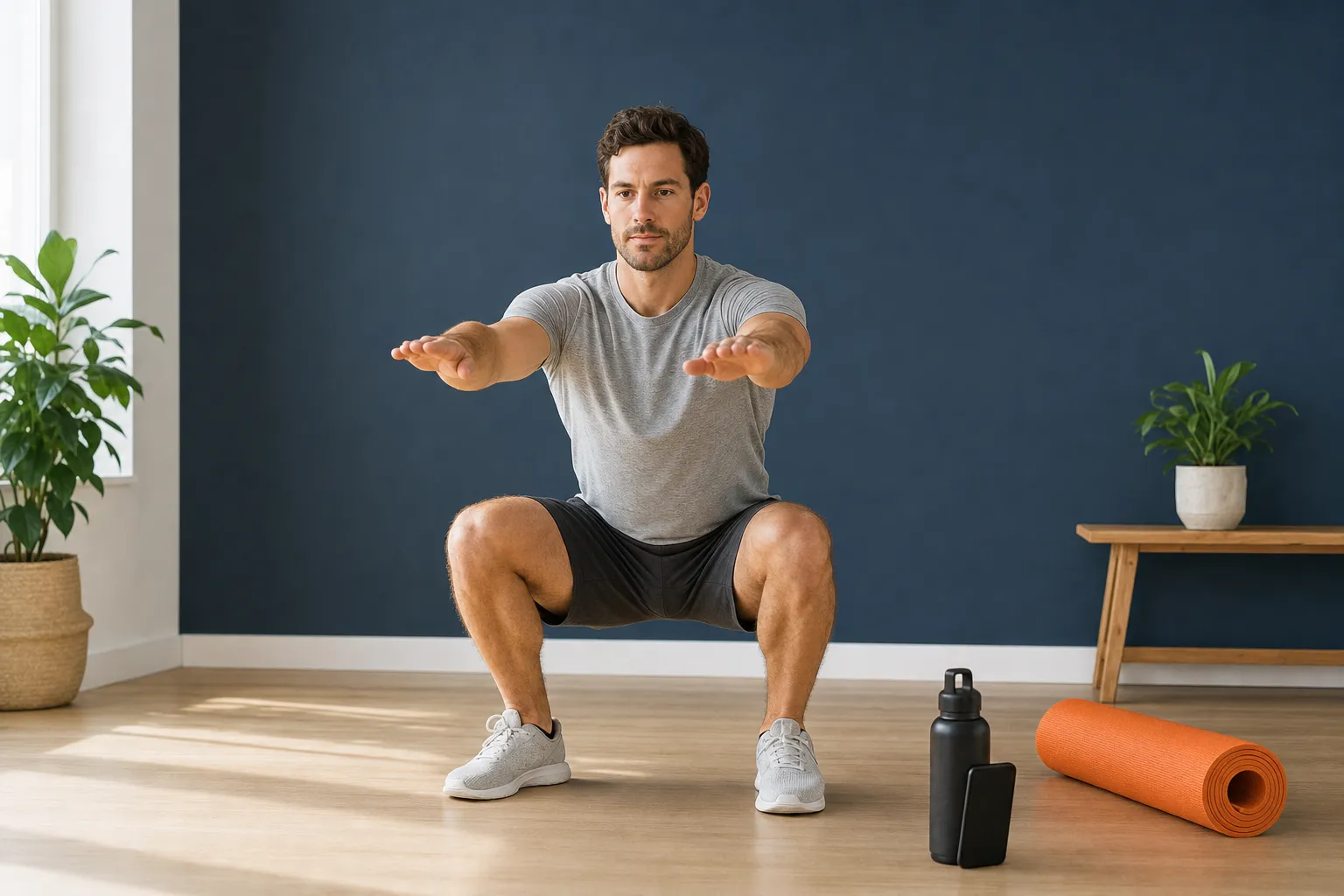
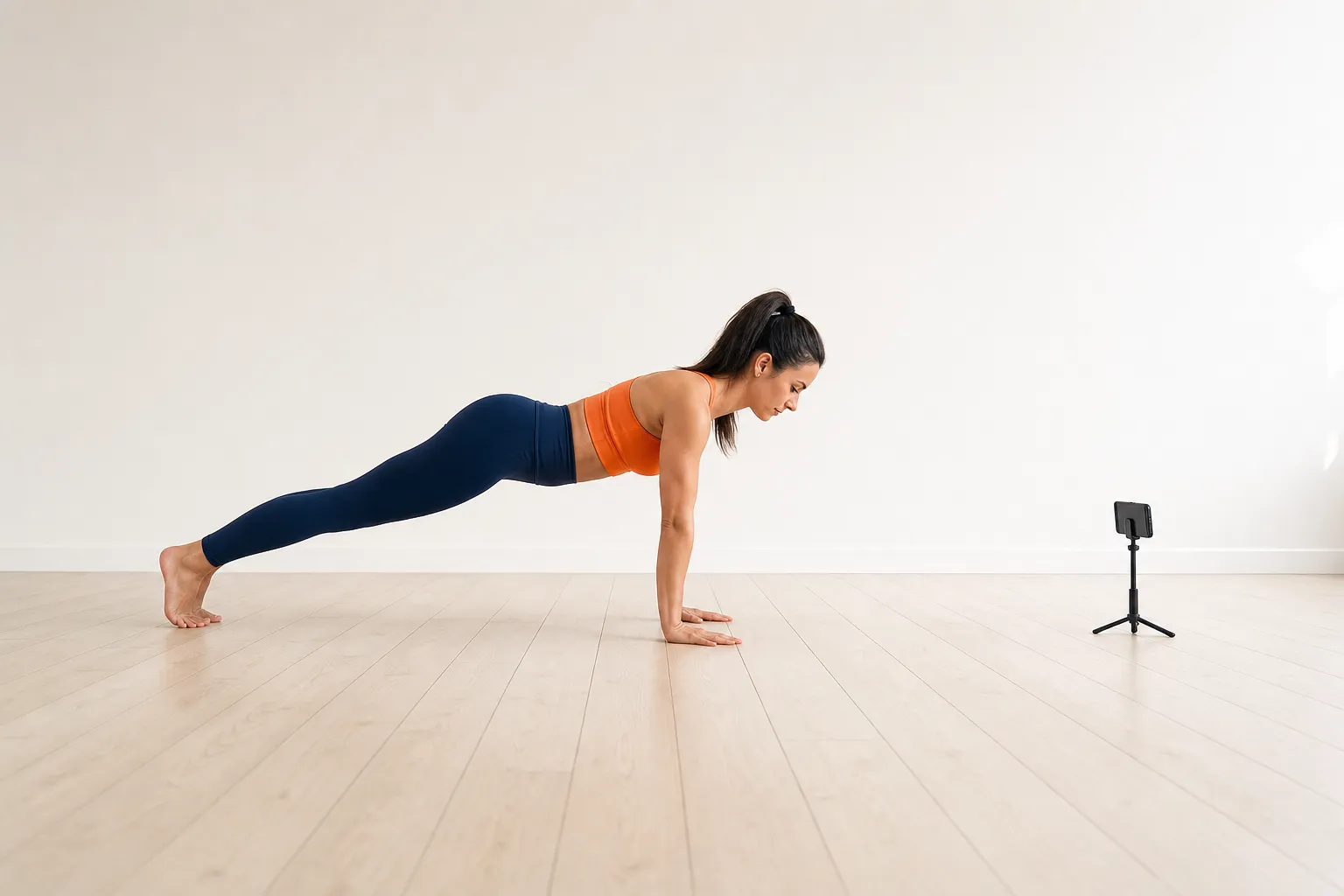
A squat counts when the hips drop a real distance with both legs bending together and the heels on the floor, and a plank counts by the second while the forearms are on the floor, the elbows under the shoulders and the body extended in one line away from the camera. BurnToScroll checks both with pose detection: for the squat it measures the angle of the thigh against the vertical, rejects a rep where one knee bends much more than the other, and requires the hips to drop by a set fraction of the body's height; for the plank it checks that the wrists are low and near the elbows and that the body reaches away into the frame. The plank check accepts a knee plank, which the code admits, because from the front the camera cannot tell.
The squat: four cues
From the app's own tips screen:
- Feet shoulder-width, toes out a little.
- Hips back, like sitting into a chair, so the knees do not lead.
- Knees track over the toes, not inward.
- Heels stay planted; if they lift, the squat is too deep for today's ankles.
What the squat counter measures
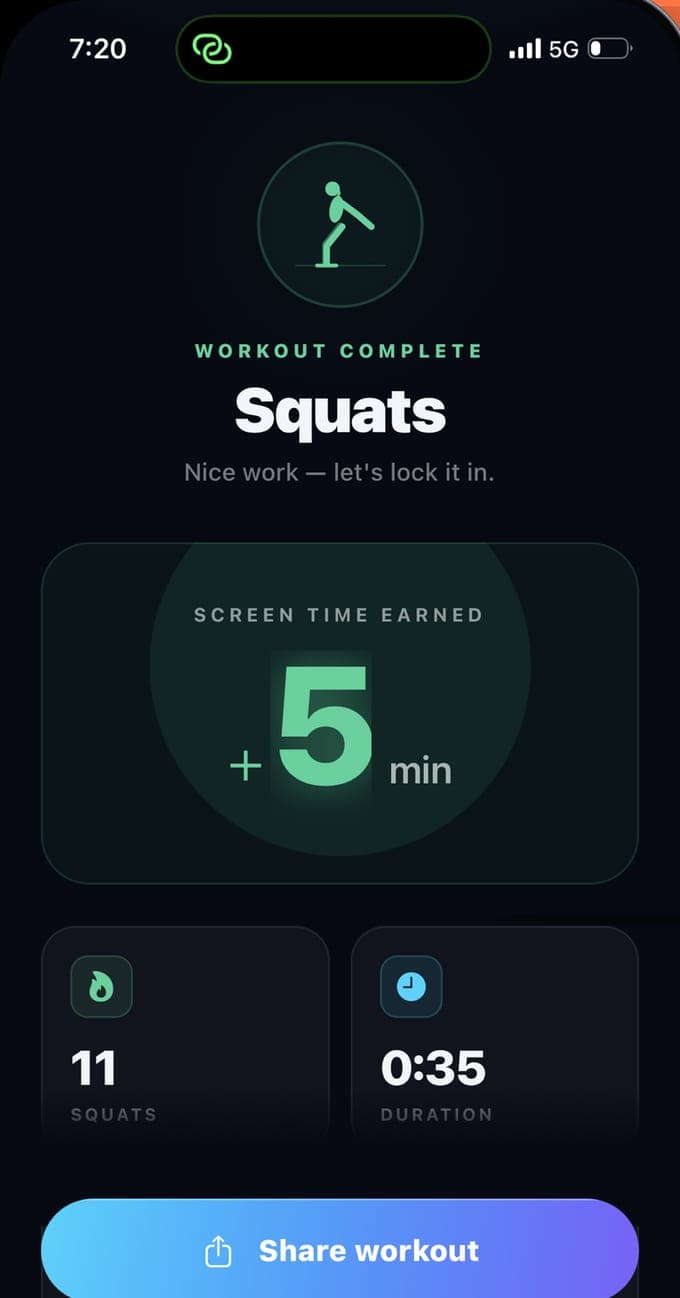
The counter works from the hip, knee and ankle landmarks and measures the angle of the thigh against vertical: near zero standing, near ninety in a deep squat. Standing, moving and bottom are three states, and a rep is a trip from standing through the bottom and back. Two anti-cheat rules sit on top. If the left and right knee angles differ by more than forty degrees, a one-legged lean or a knee tucked out of view, the rep is refused. And the hips have to drop by at least fifteen percent of the body's height on screen, which is the difference between a squat and a bob. Stand facing the camera, a couple of metres back, with your feet in frame.
The plank: four cues
Also from the app's tips, for the forearm plank it counts:
- Forearms flat, elbows under the shoulders.
- Engage the core: no sag at the hips, no pike.
- Neck neutral, gaze down at the floor.
- Breathe steadily; a held breath is what makes thirty seconds feel like ninety.
What the plank check measures, and the honest gap
The plank is checked face-on, with the phone on the floor in front of you. The app wants the wrists well below the shoulders on screen, which separates a plank from sitting in front of the phone, the elbows close to the wrists, which separates a forearm plank from a high plank, and the body extending away from the camera, which it reads from the depth the pose model estimates for the knees when it can see them. Time is paid per second held: 3 minutes per 30 seconds by default, so a 20-second hold earns 2 minutes and a 45-second hold 4.5, rounded down at the end of the session. If you drop out of position, the clock pauses and resumes when you are back. What it cannot do is tell a knee plank from a full one from the front, so a knee plank is accepted; the code says so in a comment, and the app would rather count an easier plank than refuse a real one.
Which exercise to pay with
Squats are the cheapest reps and the kindest to a beginner: 45 seconds each by default, easy to do in sets of twenty, and hard on nothing but the legs. Pushups pay double per rep and build the upper body most people neglect. The plank pays the most per minute of effort for someone who can hold one, six minutes of screen time for a one-minute hold, and it is the exercise most worth learning properly because a sagging plank is a sore back. Most people end up paying for the feed with squats on weekdays and pushups when they have the energy, and that mix is fine.
Questions people also ask
Why does the app reject my squats?
Usually depth or symmetry: the hips did not drop far enough for the camera, one leg was doing the work, or your feet were out of frame so it could not see the ankles. Step back so your whole body fits, face the camera squarely, and sit back into the squat rather than bending forward.
Does a plank on the knees earn minutes?
Yes, because the face-on check cannot tell a knee plank from a full one. It is an easier plank, not a fake one, and the app accepts it rather than refuse real planks it cannot see well.