
TCG Card Scanner
Collectibles · iOS 15.1 or later
Pokémon card scanner: identify a card from a photo and see what it is worth
TCG Card Scanner photographs a Pokémon card, works out which print it is from the name and the collector number, and opens the card's page: set, rarity, artist, and the market prices from TCGplayer in dollars and Cardmarket in euros. The database holds more than 20,000 English-language cards from Base Set to the current expansions. Add what you own with a condition and a purchase price, keep a wishlist, and build decks with a running value. Pokémon cards only, whatever the name suggests.
- 20,000+ English Pokémon cards, every set
- TCGplayer and Cardmarket prices, refreshed about daily
- Free: 5 scans a month and a 15-card collection
TCG Card Scanner is an unofficial, independent app from Vishwen Labs. It is not affiliated with, endorsed by or associated with The Pokémon Company, Nintendo, Creatures Inc. or GAME FREAK. Pokémon and all related names, marks and card artwork are trademarks and copyrights of their owners. Card data and prices come from the public sources named on these pages, and nothing here is advice to buy, sell or grade a card.
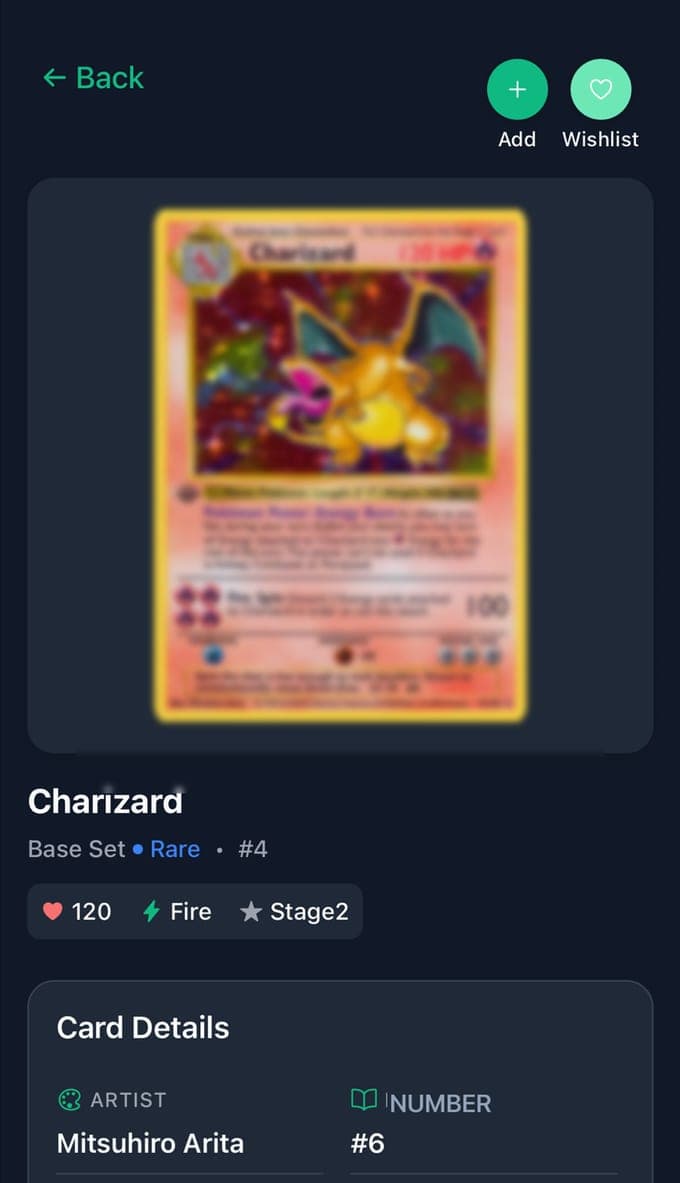
Scan
Point the camera at a card and get the exact print
A photo is enough. The app reads the card's name and its collector number, the pair that separates a Base Set Charizard from the dozens of other Charizards, and opens the card's page with the set, rarity, number, artist and type. Cards in Japanese, German, French and other languages are recognised and matched to their English print, so the prices shown are the English print's. Scan one card at a time or queue a stack in bulk mode. Five scans a month are free; Premium removes the limit.
Prices
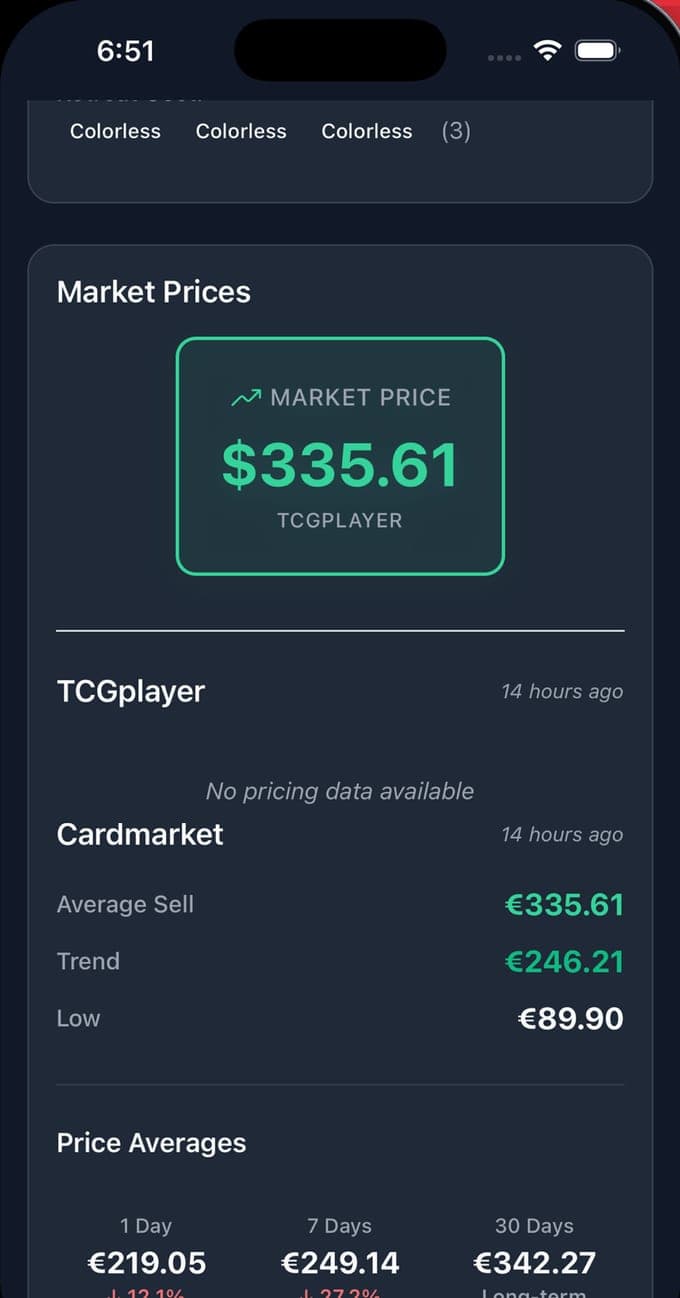
Two markets on one screen, with the time they were read
TCGplayer's Market Price is compiled from recent sales on its marketplace and is the number most of the hobby quotes in dollars. Cardmarket's Trend, Average Sell and Low describe the European market in euros, with averages over the last day, week and month. The app shows both side by side with the time of the last refresh, keeps a price history for the cards you own, and can alert you when a card crosses a price you set. Prices are a Premium feature; identification is not.
Collect and build
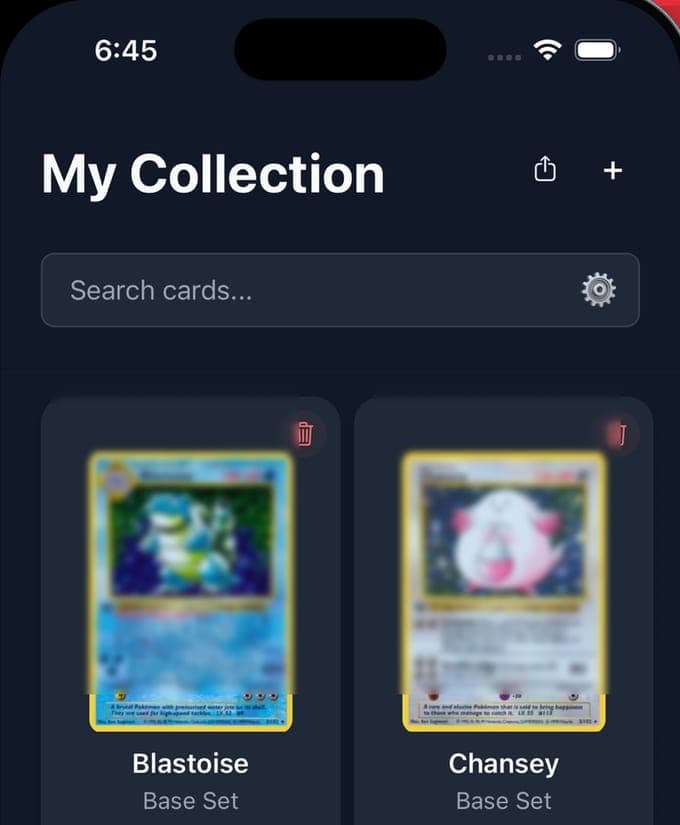
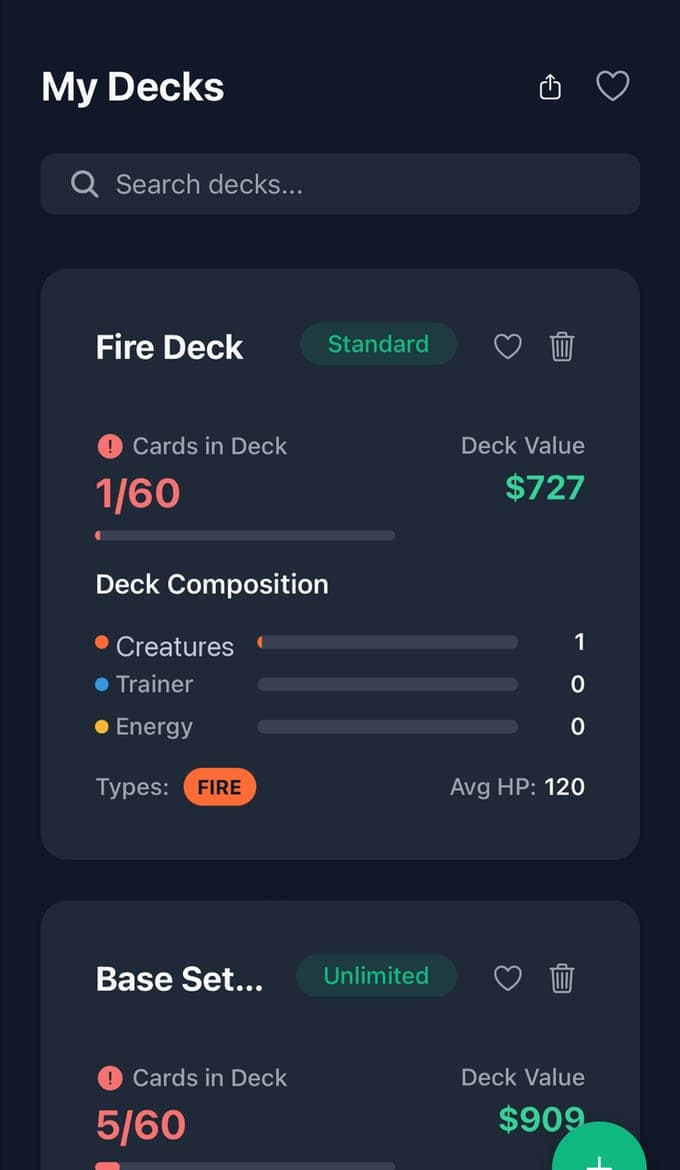
A collection with conditions, a wishlist, and decks with a value
Each card you add carries a condition from Mint to Damaged, a quantity and what you paid, so the collection's value and the gain or loss on it are known rather than guessed. Browse the whole database by set, type and rarity, put the cards you are hunting on a wishlist, and build decks in Standard, Expanded or Unlimited with a composition breakdown, a deck value, and export in text, CSV, JSON or PTCGO list formats. The free collection holds 15 cards.
How it works
Install to a valued collection.
01
Scan the card
Download TCG Card Scanner on an iPhone or iPad running iOS 15.1 or later. Lay a card flat under decent light, fill the frame, and scan. The app returns the print it recognised; if the name matches several prints, the collector number settles it, and you can pick another from the same-name list. Five scans a month are free.
02
Confirm the print, set the condition, add it
Check the set and number against the card's bottom edge, choose the condition, enter the quantity and what you paid, and add it to the collection or the wishlist. Browse the database when you want to add cards without scanning them.
03
Track the value
With Premium, every card shows TCGplayer's and Cardmarket's prices with the time they were refreshed, the collection shows its total and your gain or loss, price alerts watch the cards you name, and decks carry a value. Export lists whenever you need them elsewhere.
Guides
Pokémon card values, written out properly.
Nine guides on what people search for about their Pokémon cards: what they are worth, how to read the set symbol and the number, the rarity symbols, spotting a fake, condition from Near Mint to Damaged, whether grading pays, what TCGplayer's and Cardmarket's prices mean, cataloguing a collection, and the holo, reverse holo and 1st Edition variants.
 How much are my Pokémon cards worth, and how do you check?A Pokémon card is worth what buyers recently paid for that exact print in that condition. Where the numbers come from, what moves them, how to check.Read the guide →
 How to identify a Pokémon card: the set symbol, the set code and the collector numberRead the bottom edge: the set symbol or set code, the collector number like 025/198, the regulation mark and the copyright year say which print you hold.Read the guide →
 Pokémon card rarity symbols explained, from the circle to three gold starsCircle, diamond, star; promo; double, ultra, illustration, special illustration and hyper rare by their stars; secret rares. What each means for the price.Read the guide →
 How to tell if a Pokémon card is fakeThe Pokémon Company's light test, the texture, print, font and back checks collectors use, the too-good price, and what a scanner app cannot tell you.Read the guide →
 Pokémon card condition guide: Near Mint, Lightly Played, Moderately Played, Heavily Played, DamagedTCGplayer's five conditions in its own words, Cardmarket's seven, how condition moves the price, and how to judge a card under a light.Read the guide →
 Is grading Pokémon cards worth it?PSA's Gem Mint 10 and Mint 9 standards, what grading cost in 2026 after PSA paused its Value tiers, and the sum that decides whether to send a card.Read the guide →
 TCGplayer Market Price vs Cardmarket Trend price: what each number meansTCGplayer's Market Price, Listed Median and Most Recent Sale in its own words; Cardmarket's Trend, Average Sell, Low and day averages; why they differ.Read the guide →
 How to catalog your Pokémon card collectionSort by set, scan or search each card, confirm the print, record condition, quantity and price paid, keep a wishlist, and export the list.Read the guide →
 Holo, reverse holo and 1st Edition: the Pokémon card variants that change the priceThe variants that change a card's price: holo and reverse holo, 1st Edition and shadowless Base Set, promo stamps, Japanese prints. How to tell them apart.Read the guide →
Questions
Common questions.
How does the app identify a Pokémon card from a photo?
The photo goes to an image-recognition model that reads the card's name, its collector number and its language, and the app matches that against a database of more than 20,000 English-language prints. The number is what picks the right print among cards with the same name. You confirm the result before the card is added, and you can pick a different print from the same-name list.
Learn more →How much is my Pokémon card worth?
What buyers have recently paid for that exact print in that condition. TCGplayer's Market Price is compiled from recent sales on its marketplace; Cardmarket's Trend and Average Sell describe the European market in euros. The app shows both for the print you scanned, and the value guide explains what moves the number: set, number, variant, condition and grading.
Learn more →Where do the prices come from, and how often do they update?
From TCGplayer (US dollars) and Cardmarket (euros), through a public card-data service that refreshes them about once a day. Each price row in the app shows how long ago it was read. The prices are for the English print of the card; Japanese and other-language cards are priced separately on the marketplaces and the app does not carry those.
Learn more →Is TCG Card Scanner free?
Free to download, with five scans a month, a collection of up to 15 cards, the full card database to browse and the deck builder. Premium removes the scan and collection limits and unlocks the market prices, price history and price alerts. It costs $2.99 a week or $24.99 a year on the App Store.
Does it scan Magic, Yu-Gi-Oh! or other trading cards?
No. Despite the name, this app identifies Pokémon cards only, and its database is the English-language Pokémon TCG. Vishwen Labs publishes separate scanners for other games.
Can the app tell if a Pokémon card is fake?
No. It identifies which card a photo shows; it does not authenticate the card in your hand, and a good counterfeit of a real print will be identified as that print. The fake-card guide covers the tests collectors use: texture, print quality, the light test, the font and the back.
Learn more →Does the app grade my cards?
No. You record a condition yourself, from Mint to Damaged on the scale TCGplayer uses, and the price shown is for the print rather than for a graded copy. The grading guide explains PSA's scale and fees and when sending a card off makes sense.
Learn more →What do the rarity symbols on Pokémon cards mean?
A circle is common, a diamond uncommon and a star rare; Scarlet & Violet cards add double rare (two black stars), ultra rare (two silver stars), illustration rare (one gold star), special illustration rare (two gold stars) and hyper rare (three gold stars). The app shows each card's rarity from the database, and the rarity guide goes through every symbol.
Learn more →Can I export my collection or a deck?
Yes. Collections and decks export to CSV, and decks also to plain text, JSON and the PTCGO list format, so a list can go into a spreadsheet, a forum post or another tool.
Learn more →Is this an official Pokémon app?
No. TCG Card Scanner is an unofficial, independent app from Vishwen Labs and has no connection with The Pokémon Company, Nintendo, Creatures or GAME FREAK. Card names and artwork belong to their owners; the prices are TCGplayer's and Cardmarket's; the facts on these pages are cited to their sources, and none of it is advice to buy, sell or grade.
Download
TCG Card Scanner, free to start
Five scans a month, a collection of up to 15 cards, the full card database and the deck builder are free. Premium removes the limits and shows the market prices, at $2.99 a week or $24.99 a year, on iPhone and iPad running iOS 15.1 or later.