How to tell if a Pokémon card is fake
Vishwen Labs
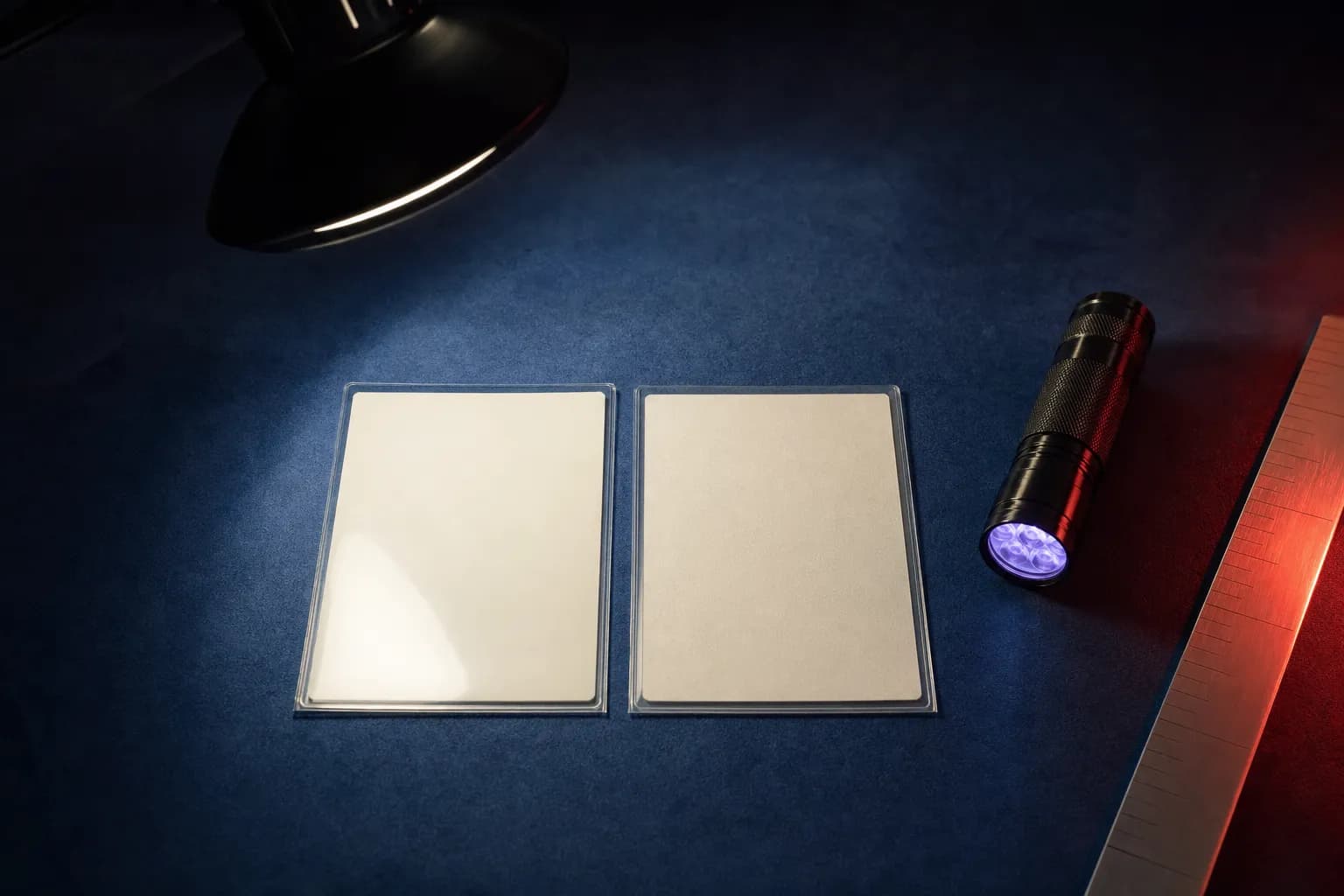
Hold the card up to a bright light first. The Pokémon Company's own support page says counterfeit cards “are often easy to see through if you hold them up to a bright light,” and that a pack priced “dramatically below suggested retail price is a near certain warning.” After that, collectors rely on touch and print: a genuine modern card has a fine texture and a crisp, saturated print, while fakes tend to be glossy or flat, blurry, oddly coloured, with wrong fonts and spacing. No app can settle it from a photo; a scanner identifies which card an image shows, not whether the card in your hand is real.
The three checks from The Pokémon Company
Its support article on counterfeit cards makes three points. The light test: real cards have a thin dark layer in the stock, so a card that lights up like paper is suspect. Packaging: official product images are on pokemon.com, and “familiarizing yourself with what the official decks look like” catches the many knockoffs that never resemble the real thing. Price: fake boosters can be hard to tell apart, but a pack far below retail “is a near certain warning that you're being sold counterfeit merchandise.” It also suggests a local card shop, which will have handled thousands of real cards and can compare.
Texture, gloss and print
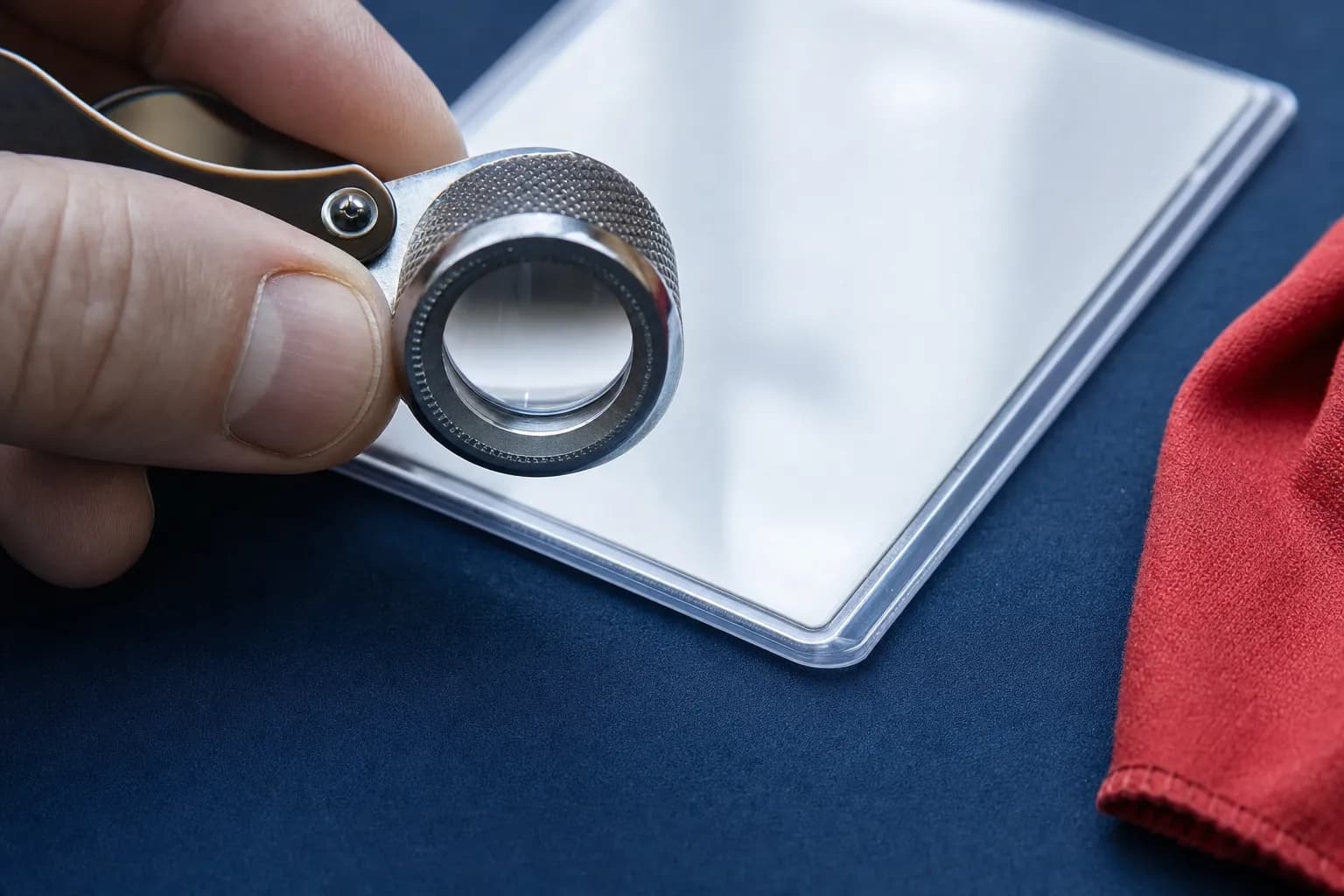
Modern real cards have a faint texture on the front and a matte back; full-art and illustration rare cards have a pronounced etched pattern you can feel. A high-end modern card that is perfectly smooth and glossy is almost always fake. Under a loupe, genuine printing is sharp with clean edges to the text and the energy symbols; counterfeits are often slightly blurred, over-saturated or washed out, with the art printed off-centre against the border. The holofoil on a fake tends to be a flat rainbow sheen over the whole card rather than the specific pattern of that set.
Font, spacing and spelling
Counterfeiters rarely have the right typeface. Letter spacing that is too wide or uneven, a slightly wrong weight, HP printed in the wrong size, energy symbols drawn a little off, and outright misspellings are common. Compare with an image of the real print on TCGplayer or the app's card page and read the attack text word for word. Impossible stats, an HP of 1000 or an attack doing 9999 damage, are fakes made for children, not for collectors, and are the easy cases.
The back, the edge and the weight
The back of a real card is a specific dark blue with a Poké Ball design that has changed little in twenty-five years; fakes are often lighter, purplish or over-bright, with the swirl detail muddy. Look at the cut edge: real stock shows a thin dark core between two light layers, which is what the light test is checking. A card that is noticeably thinner, floppier or heavier than a known real card from the same era is suspect. None of these is proof on its own; several together usually are.
What a scanner app can and cannot do
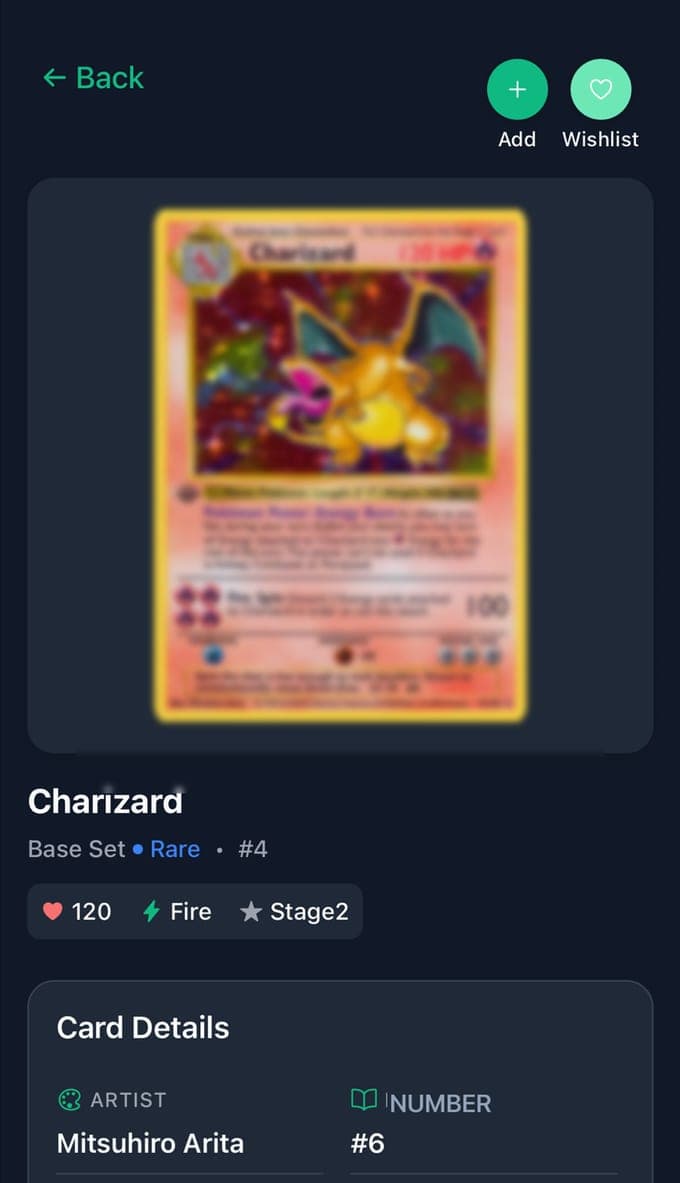
TCG Card Scanner reads a photo, works out which print it shows and gives you that print's set, number, artist and prices. That is useful against fakes in one way: it hands you the real card's details to compare, and a card whose number, set code or text do not match the identified print is wrong somewhere. It cannot tell a well-made counterfeit of a real print from the real thing, and neither can any app working from a photo. For a card worth real money, the answer is a grading company, which authenticates before it grades, or a reputable shop.
TCG Card Scanner is an unofficial, independent app from Vishwen Labs. It is not affiliated with, endorsed by or associated with The Pokémon Company, Nintendo, Creatures Inc. or GAME FREAK. Pokémon and all related names, marks and card artwork are trademarks and copyrights of their owners. Card data and prices come from the public sources named on these pages, and nothing here is advice to buy, sell or grade a card.
Questions people also ask
Do fake Pokémon cards pass the light test?
Some do. The Pokémon Company recommends the light test because most counterfeits are see-through, but better fakes copy the dark layer. Combine it with texture, print quality, the font and the back, and for a valuable card have it authenticated.
Can an app detect fake Pokémon cards?
Not from a photo. Scanner apps identify which card an image shows and fetch its details and prices; a good counterfeit of a real print will be identified as that print. Use the identification to compare details, and use a grading company or a shop for authentication.