How to write a demand letter
Vishwen Labs

A demand letter sets out what happened, what you want, by when, and what you will do if it does not arrive. It works because it is often the first moment the other side takes the problem seriously, and because a calm, factual letter is uncomfortable to ignore. Keep it short, keep it free of insults, and make the ask specific: a number, a date, a bank account. Many disputes settle at this stage without anyone filing anything. This is general information rather than legal advice; if the amount is significant or the other side has a lawyer, get one.
The structure
Five parts, in this order, on one page if possible:
- Who you are and what the relationship is. One sentence, with the contract or invoice number if there is one.
- The facts. Dates, amounts, what was agreed and what happened, in order, without adjectives.
- The demand. Exactly what you want: the sum, the repair, the return of the item, the account it should be paid into.
- The deadline. A specific date, usually ten to thirty days out, that is long enough to be reasonable.
- What happens next. What you will do if the deadline passes, stated plainly and only if you mean it.
The tone that works
Firm and boring. A letter that reads like a summary of facts is harder to dismiss than one that reads like an argument, and it is the version you would be comfortable seeing attached to a court filing later, because it may well be. Leave out how the situation made you feel, leave out what you think of the other side, and leave out threats that go beyond the civil claim you actually have: telling someone you will report them to the police unless they pay can itself be unlawful, depending on the state. Attach the evidence rather than describing it, keep the copies, and give them a way to fix it.
Sending it so it counts
Send it in a way that produces proof of delivery: certified mail with a return receipt is the traditional route in the United States, and many people send an email at the same time so the other side cannot say they never saw it. If a contract sets out how notices must be given, follow that clause exactly; a notice sent the wrong way can be treated as not sent at all. Keep the letter, the receipt and any reply together, because a demand letter matters as much for the record it creates as for the reply it gets.
What comes after
Three things usually happen. They pay, which is the common outcome for small sums where the facts are clear. They negotiate, in which case a settlement agreement that records the payment and closes the matter is worth having in writing. Or they ignore it, which leaves small claims court, where the limits and the process are set by each state and the filing fee is modest, or a lawyer if the amount justifies one. A demand letter is a step on that path rather than a substitute for it, and it is the cheapest step.
When not to send one
If the other side has already involved a lawyer, write to the lawyer or get your own. If the dispute involves a restraining order, a criminal matter, an employee complaint or anything with a deadline you might miss, take advice first; some claims have short limitation periods and a letter does not stop the clock. And if you would not be comfortable reading the letter aloud in a courtroom, rewrite it before you send it.
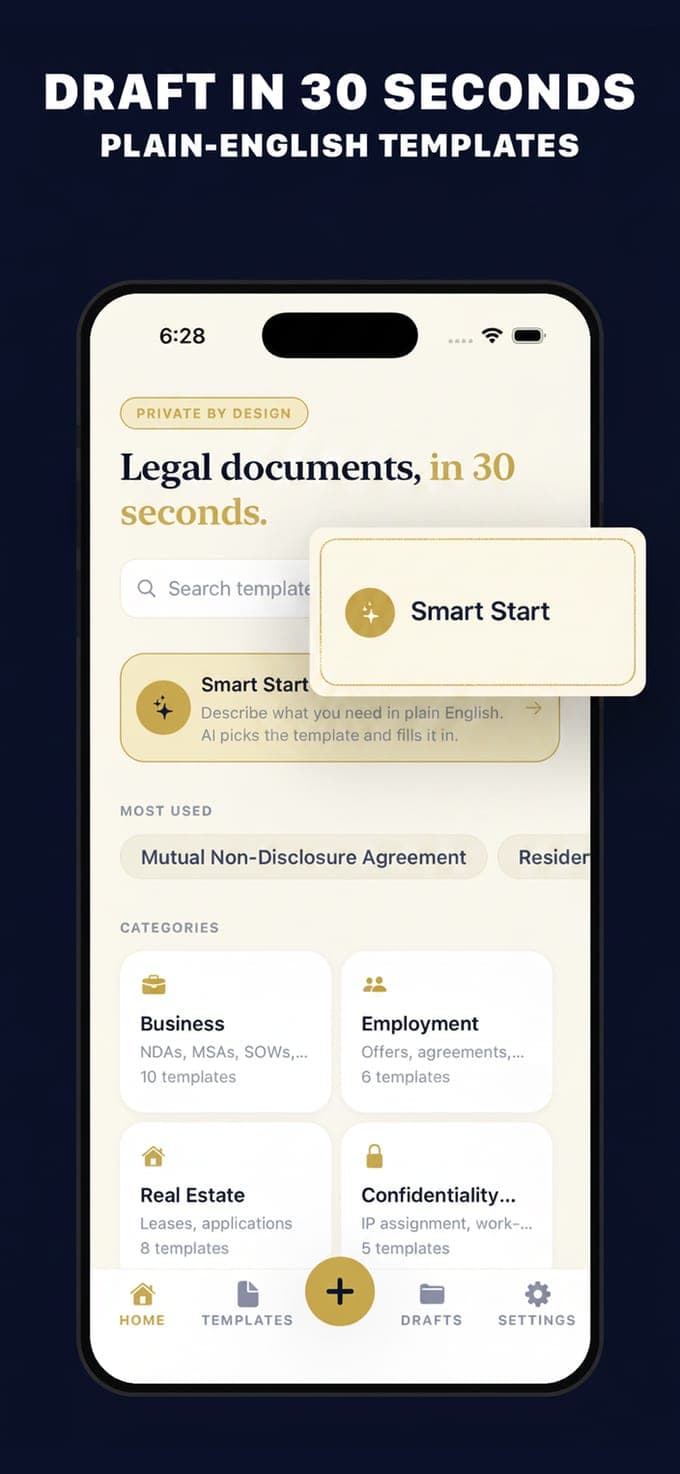
Contract Maker is a drafting tool from Vishwen Labs, not a law firm. The templates are starting points written in plain English, they are not legal advice, and using the app does not create an attorney-client relationship. Every template says so itself: it is a template to get you started, and for anything important you should talk to a qualified lawyer where you live. The pages here explain what documents usually contain; they do not tell you what to sign.
Questions people also ask
Does a demand letter have to come from a lawyer?
No. A clear letter from you is enough to start the conversation and to create a record. A letter on a lawyer's letterhead carries more weight and costs money; it is worth it when the amount is large or the other side has ignored you already.
How long should I give them to respond?
Ten to thirty days is usual, and a contract may set a period you have to follow. Choose a date that is long enough to look reasonable to a judge and short enough to keep the pressure on, then hold to it.