What to include in a residential lease agreement
Vishwen Labs

A residential lease needs the parties, the property, the term, the rent and when it is due, the deposit, who pays which utilities, who repairs what, when the landlord may enter, the rules on pets and subletting, and how the tenancy ends. That is the structure. The content of several of those clauses is not really yours to choose: deposit limits and return deadlines, notice periods, entry rules and required disclosures are set by state and often city law, and a lease term that conflicts with them is usually unenforceable. This is general information, not legal advice, and landlord-tenant law is the area where a local lawyer earns their fee fastest.
The clauses every lease has
In the order most leases put them:
- Parties and property. Every adult tenant by full name, the landlord or agent, and the address including the unit.
- Term. Fixed term with start and end dates, or month to month, and what happens when a fixed term runs out.
- Rent. The amount, the day it is due, how it is paid, and any late fee, which many states cap or require to be reasonable.
- Security deposit. The amount, what it covers and when it is returned. Caps and deadlines are set by state law.
- Utilities and services. Which are the tenant's, which the landlord's, and how any shared meter is handled.
- Maintenance and repairs. Who fixes what, how the tenant reports a problem, and the landlord's duty to keep the place habitable, which cannot be waived in most states.
- Entry. The notice the landlord must give before entering and the reasons that allow it, usually set by statute.
- Occupancy, pets, smoking and subletting. Who may live there, what is allowed, and whether assignment needs consent.
- Ending it. Notice periods on both sides, what counts as a breach, and what happens to the deposit and belongings.
The parts your state decides
Deposit rules are the classic example: the maximum, whether it must sit in a separate account, whether interest is owed, how many days the landlord has to return it and itemise deductions. Notice periods for ending a month-to-month tenancy or raising the rent are statutory. So is the entry notice, commonly a day but not everywhere. Some states require particular disclosures in or with the lease, and federal law requires a lead-based paint disclosure and pamphlet for most housing built before 1978. Rent control and just-cause eviction rules add another layer in some cities. A national template cannot carry all of that, which is why Contract Maker's residential lease has 14 state versions and says plainly when a state is not one of them.
Month to month, or a fixed term
A fixed term gives both sides certainty: the tenant cannot be asked to leave without cause before it ends, and the landlord has the unit taken for the period. Month to month gives both sides flexibility and, in most states, a short notice period on either side. Landlords often start with a fixed year and roll into month to month afterwards, which is why the app has a separate month-to-month template with its own state versions, plus a notice to vacate and a lease termination letter for the end of either arrangement.
The paperwork around the lease
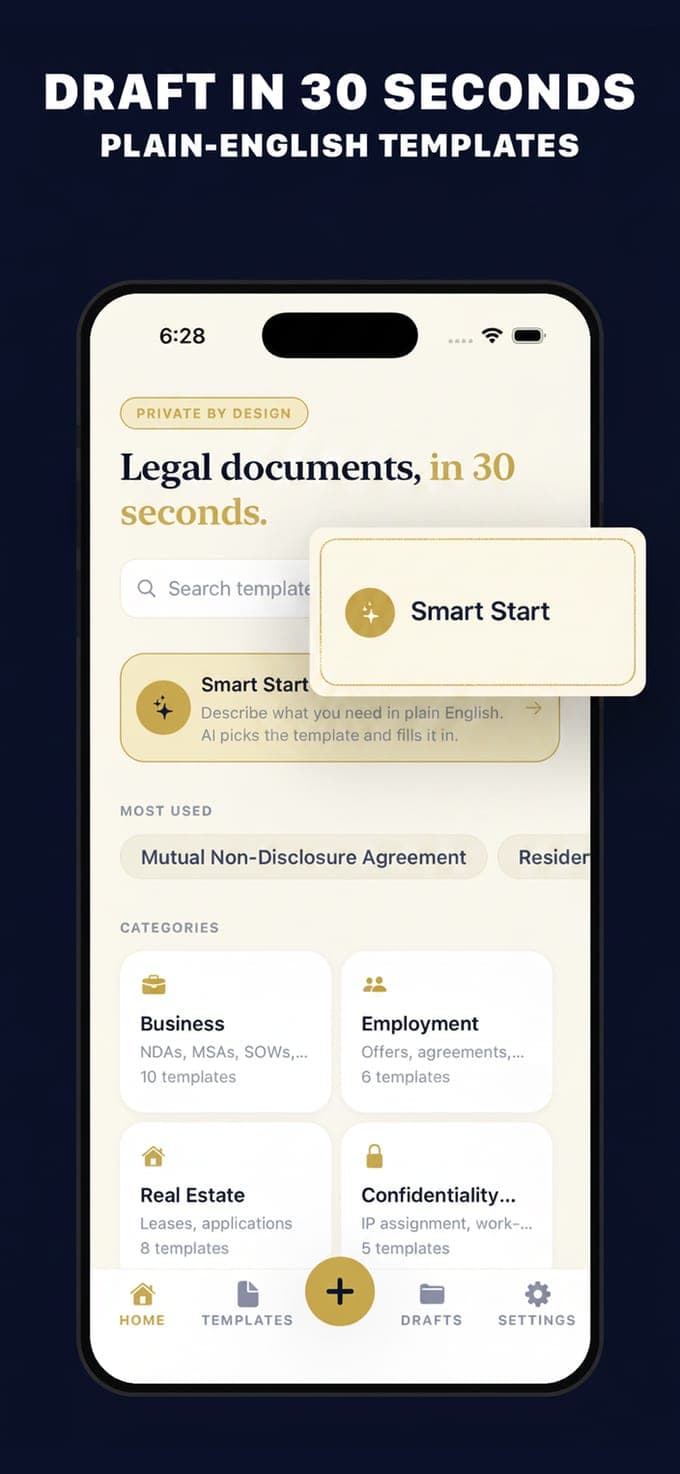
A lease rarely travels alone. A rental application collects what a landlord needs before saying yes. A pet addendum sets the terms for an animal without rewriting the lease. A move-in checklist, signed by both, prevents most deposit arguments later, and photographs on the day are worth more than any clause. A sublease or roommate agreement covers the people the landlord did not sign with. When the tenancy ends, a notice to vacate or a lease termination letter puts the date beyond argument. All of those exist in the app as separate templates.
Before either side signs
Check the names of every adult who will live there and whether they are jointly liable. Check that the rent, the due date and the late fee match what was agreed out loud. Check the deposit against the state's cap. Read the entry and repair clauses; they are what daily life under the lease feels like. And take photographs of the condition on the day the keys change hands, whatever the lease says about it.
Contract Maker is a drafting tool from Vishwen Labs, not a law firm. The templates are starting points written in plain English, they are not legal advice, and using the app does not create an attorney-client relationship. Every template says so itself: it is a template to get you started, and for anything important you should talk to a qualified lawyer where you live. The pages here explain what documents usually contain; they do not tell you what to sign.
Questions people also ask
Can a lease say the tenant waives repairs?
Generally no. Most states imply a warranty of habitability that a lease cannot waive, and clauses that try are unenforceable. Repair responsibilities for smaller things can be allocated, within what the state allows.
Does a lease have to be notarised?
Usually not. Signatures from the landlord and every adult tenant are what matter for a residential lease. Some states have particular rules for long leases, and a notary is more common on documents recorded against the property.