How to test your max pushups
Vishwen Labs
Test your max pushups on a rested day after a light warm-up: one set, full range on every rep, at a steady pace, until you cannot do another clean one, and then stop rather than grind out half reps. Record the number with the date, do not test again for two to four weeks, and train in sets below that number in between. A max is only useful if it is measured the same way each time, which is the argument for a counter that refuses half reps: Push Up Counter's Max Reps mode counts a rep only when the elbows pass 130 degrees and return to 150, so a 38 in April and a 46 in June are the same kind of 38 and 46.
The protocol
Seven rules that make the number repeatable:
- Rested: no hard upper-body work the day before, and not at the end of a session.
- Warm: two or three minutes of arm circles and ten easy pushups, then two minutes of rest.
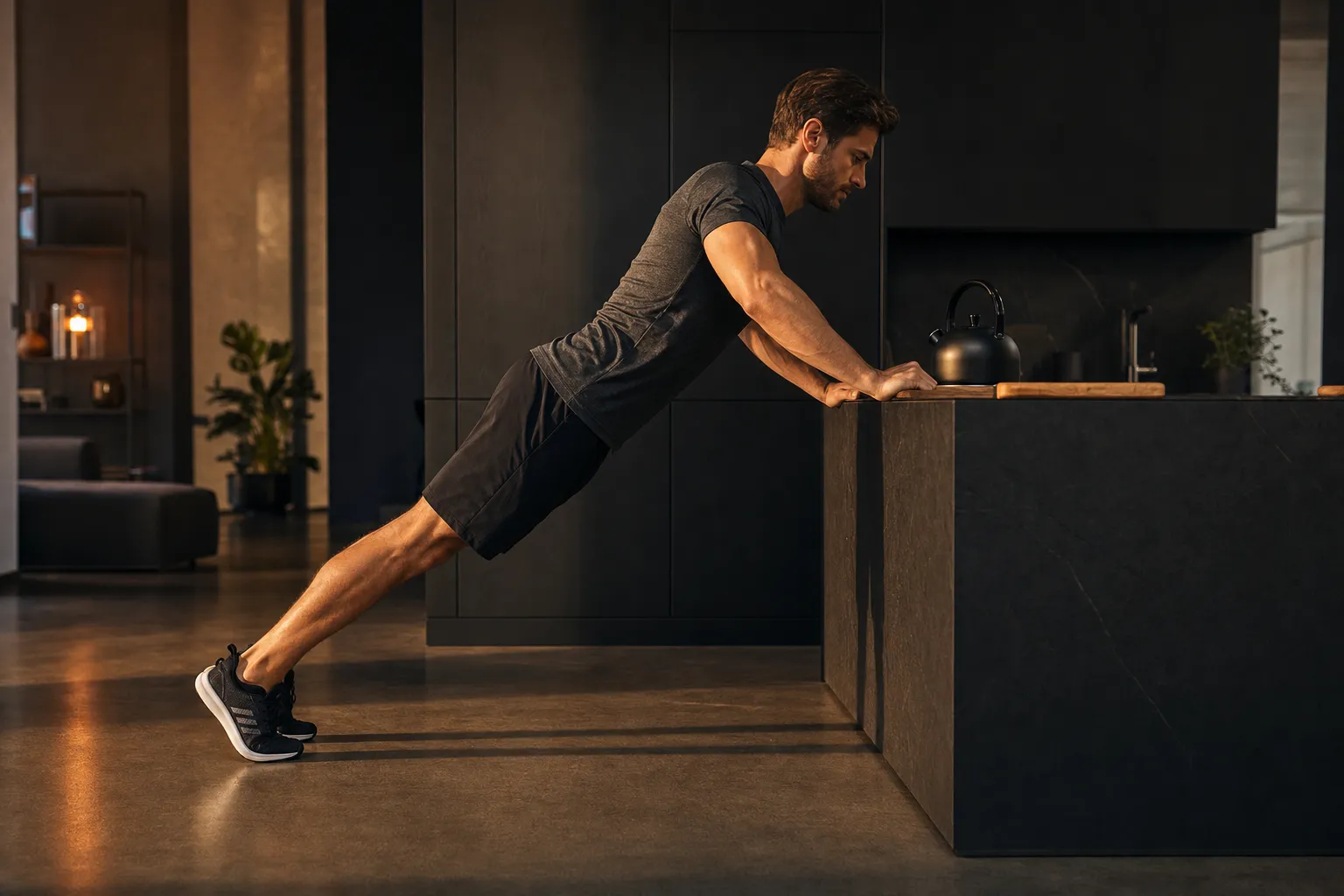
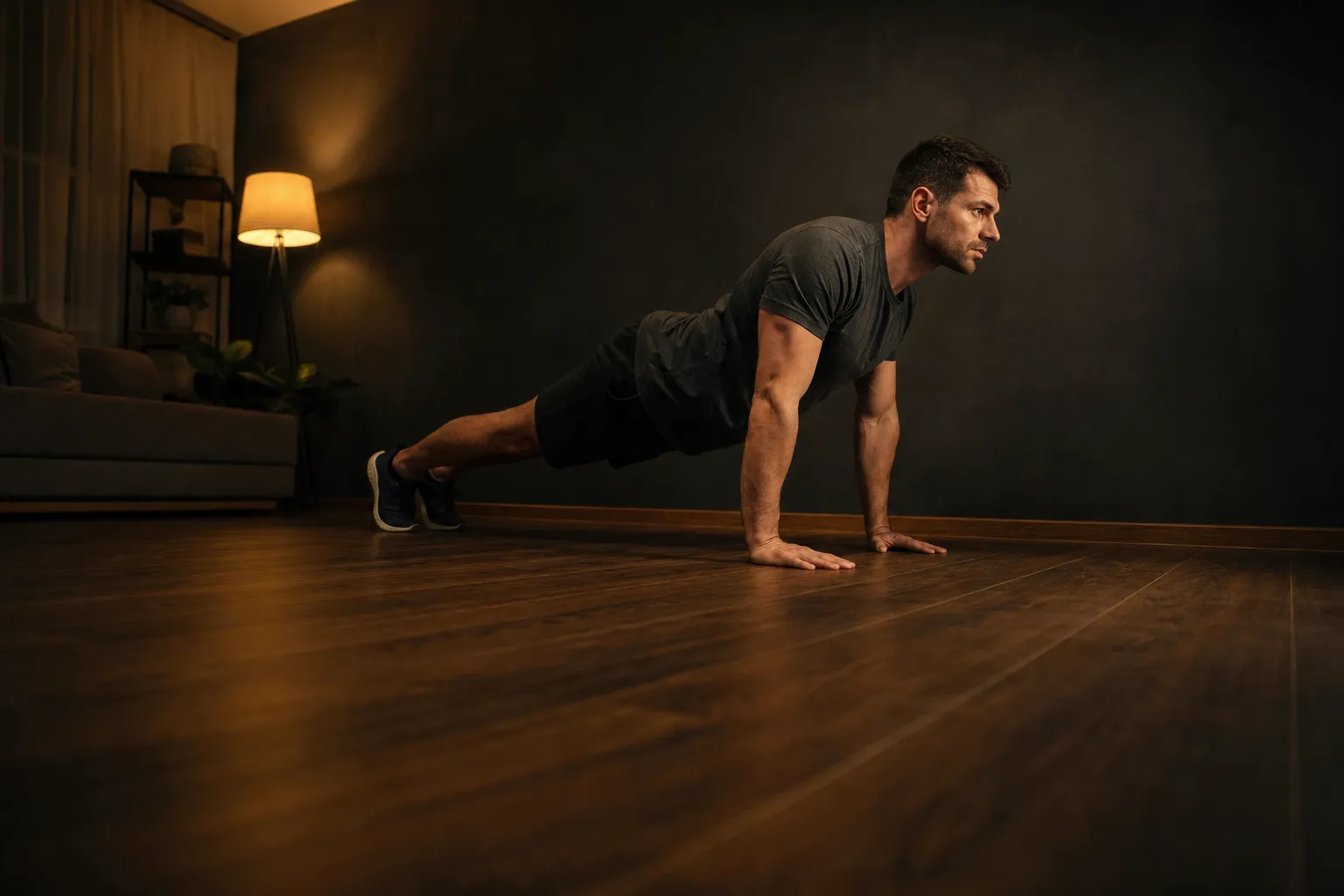
- One set, full range: chest near the floor, arms straight at the top, body in a line.
- Steady pace: about one rep a second. Racing the first ten costs the last ten.
- Stop at the first rep you cannot finish cleanly, not at the first that feels hard.
- Record it with the date, and the conditions if anything was unusual.
- Repeat every two to four weeks, at the same time of day if you can.
What counts as a rep in a test
The reason home maxes are inflated is that the last reps get shorter and nobody is watching. Fitness tests define a rep by depth and lockout: in most military and school tests the upper arm has to reach parallel to the floor, or the chest a fist's height from it, and the arms must straighten fully at the top. Push Up Counter applies the same idea in degrees: a rep opens when the elbows bend below 140, must reach 130 or less at the bottom, and closes only when they straighten to 150, and the form score records how many reps stopped short. Your max is the count of full reps, and the score beside it tells you how honest the set was.
What the app records
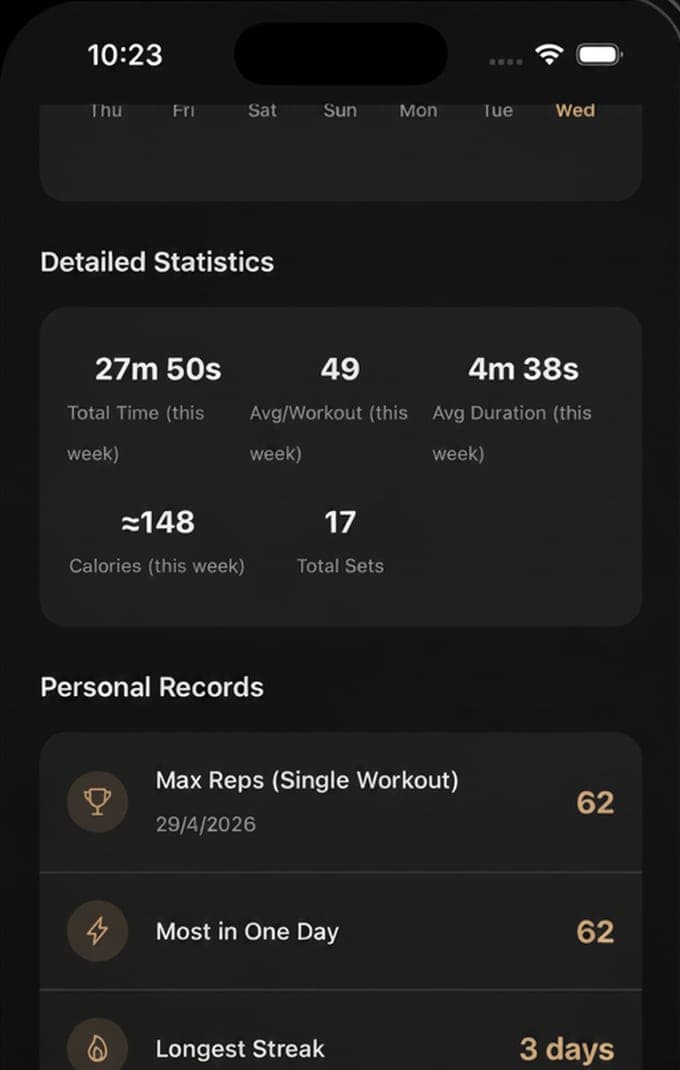
Max Reps mode is one set with no target; it ends when you stop, and it is a Pro mode, as are EMOM and Tabata. The results screen compares the set with your personal best and your last workout, and a new best gets its own celebration. On the Progress tab, Personal Records keeps the max reps in a single workout with the date it was set, the most reps in one day, the longest streak and the total workouts, so the history of your maxes is a list you can read back. Without Pro, a single set of Sets mode with the reps set high does the same job, only without the comparison screen's max-specific framing.
Reading your number
Standards vary by age, sex and the test, and the tables published for military entry or school fitness tests are the honest reference for where a number sits; roughly, a healthy adult who can do twenty clean pushups is in reasonable shape, forty is good, and sixty or more is strong, with women's standards set lower in most tables because of upper-body mass. The more useful comparison is with your own previous test. A max that climbs by two or three reps a month for a beginner, or one or two for someone past forty reps, means the training between tests is working.
Between tests
The test tells you where you are; the sets between tests move the number. Train at 50 to 70 percent of the max per set, three or four sets, three or four days a week, and add a rep a week, as the progression guide sets out. Testing more often than every two weeks does not give the training time to show, and testing to failure often enough becomes its own fatigue. A missed target on test day is usually sleep, a hard week or a cold, and is a reason to retest in a fortnight rather than to change the plan.
Questions people also ask
How often should I test my max pushups?
Every two to four weeks, on a rested day, at the same time of day. Testing weekly turns the test into training to failure and blurs the number; testing rarely hides progress you could have used.
Is a knee pushup max comparable to a full pushup max?
No; it is a different exercise with less of the body on the arms. Record knee maxes separately while you build to the floor, and start a new line of records when full pushups arrive.