How many pushups a day should you do?
Vishwen Labs

A beginner should do two or three sets of 5 to 10 pushups a day, or every other day, and add a rep or two a week; someone who can already do 20 in a row can work with 50 to 100 a day spread across sets, and past that the number matters less than the quality and the rest. Coaches disagree about the exact figures and agree about the shape: more sets of clean reps beat one long set of sloppy ones, a day off after a hard day builds more strength than grinding daily, and the count only helps if it is honest. That last part is where a camera earns its keep.
Three numbers, by where you are
Rough targets that most coaching advice lands on:
- Cannot do ten yet: two or three sets of as many clean reps as you can, even if that is three, with a minute's rest between. Every day or every other day. Add a rep to a set each week.
- Ten to twenty in a row: three or four sets of 8 to 12, resting 60 to 90 seconds, three or four days a week. Around 40 to 50 reps a session.
- Twenty or more: 50 to 100 a day in sets that stop a couple of reps short of failure, with one or two rest days a week and a max test now and then. Past 100 a day, add difficulty (feet raised, slower tempo) rather than volume.
Sets beat one long set
The reason every plan above is written in sets is that form collapses with fatigue: the hips sag, the elbows flare, the chest stops going down, and the last ten reps of a fifty train bad habits more than they train the chest. Three sets of fifteen with a minute between them get the same forty-five reps done with the body in a line the whole time. Push Up Counter's Sets mode is built for this, with a rest timer between sets, and its form score tells you when a set went bad: the hip-alignment and depth parts of the score fall exactly when fatigue starts writing the reps for you.
Rest is part of the count
Muscle is built between sessions. Doing pushups every single day works for low volumes, a few sets of easy reps, but a hard session, near-failure sets or a max test wants a day off before the next one. The common pattern is three or four hard days a week, or a hard day followed by an easy one. A sore chest or shoulders the morning after is normal; pain in the wrists, elbows or shoulder joints is not, and is a reason to drop the volume or ask someone qualified.
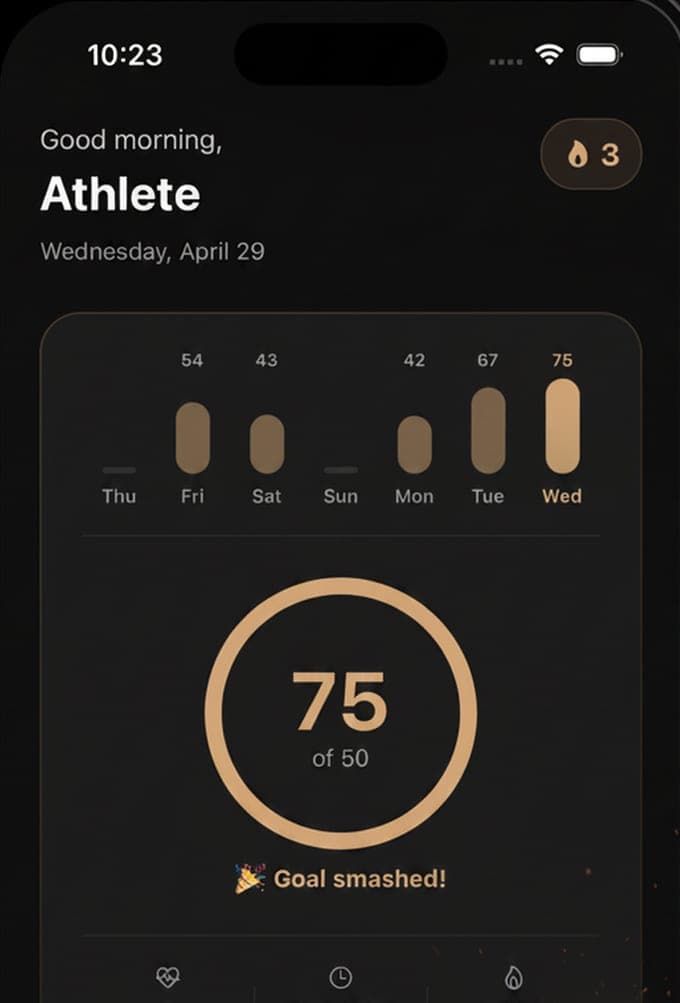
What the app counts as a day
Push Up Counter sets a daily rep goal and a weekly one, 100 and 700 by default and both editable, and fills a ring on the home screen as sets are logged. A day with at least one workout extends the streak, and a reminder at 8 in the evening speaks up if the day is still empty. The goal is a floor, not a ceiling: a big day can pass it, and the results screen says so. The point of the goal is to make the plan above visible, so the week's bars on the home screen and the weekly total on the Progress tab show whether the sets actually happened.
Honest counting
Most daily-pushup plans fail on the count rather than the effort. Reps get rounded up, half reps get counted, and the number on the fridge stops meaning anything. A counter that only counts a rep when the elbows bend past 130 degrees and straighten again to 150 keeps the number honest, and a form score that drops when the hips sag keeps the reps honest too. The number you write down then means the same thing on day forty as on day one, which is the only way to know that you are getting stronger.
Questions people also ask
Is 100 pushups a day good?
For someone who can do 25 or so in a row, 100 a day in sets is a solid volume and the app's default daily goal. For a beginner it is too many, and for an advanced trainee it becomes maintenance rather than progress. Add difficulty before adding more reps.
Should I do pushups every day or every other day?
Low volumes of easy reps can be daily. Hard sets, near-failure work and max tests want a day between them. Most people do best with three or four harder days a week and easy or empty days between.