Pushup form: depth, alignment and symmetry, and how a camera scores them
Vishwen Labs
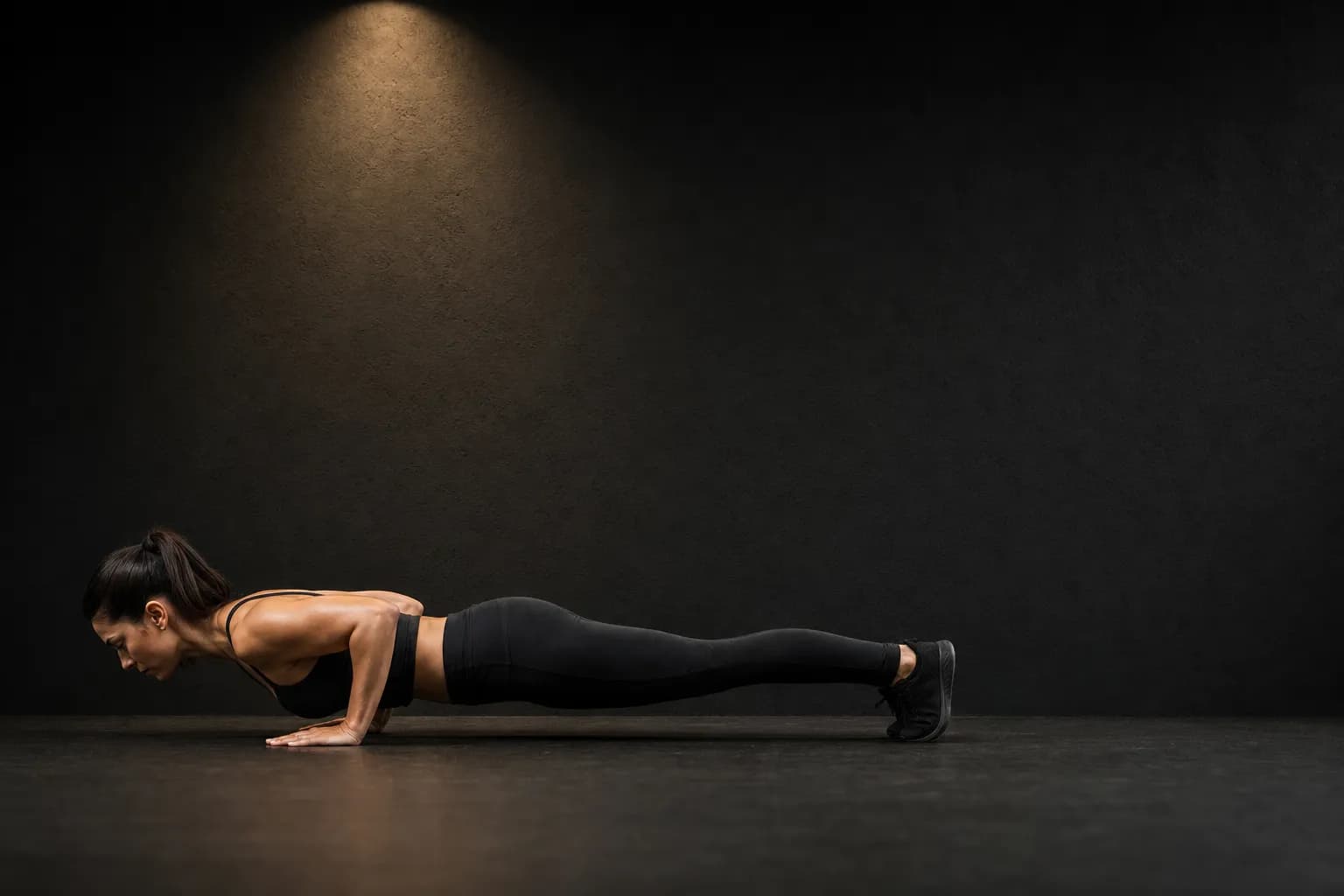
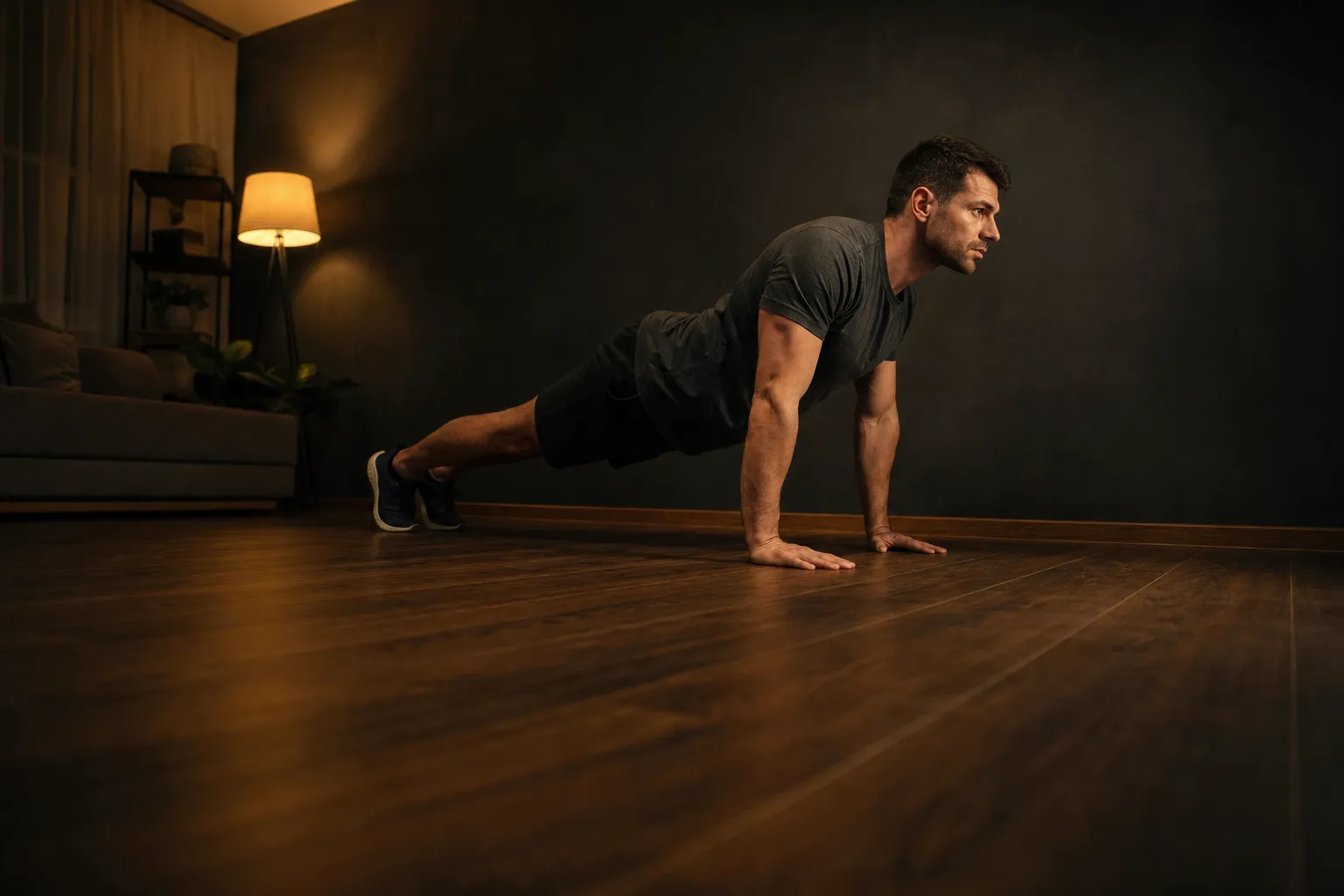
A good pushup keeps the shoulders, hips and ankles in one line, bends both elbows evenly until the chest is near the floor, and straightens the arms fully at the top. Those are also the four things a camera can measure, which is why Push Up Counter's form score is built from them: hip alignment within 15 degrees of a straight line, 30 points; the two elbows bending within 15 degrees of each other, 25; every rep reaching depth, 25; every rep locking out, 20. A set above 90 is excellent, above 75 good, above 60 fair, and below that the app names the fault. The rest of this page is what each part means and how to fix it.
Alignment: the line from shoulders to ankles
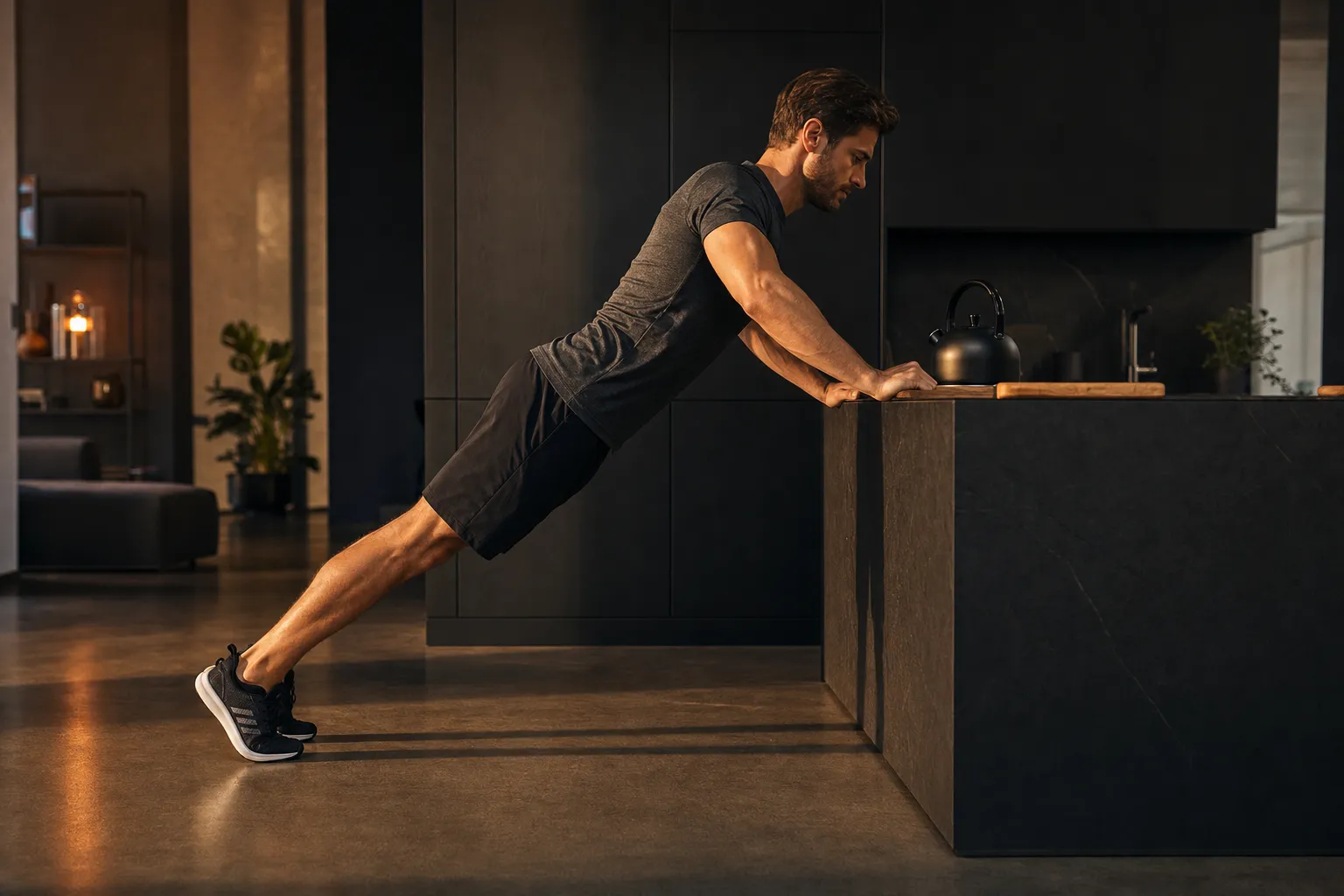
The body should move as one plank. The app measures the angle at the hip between shoulder, hip and ankle and allows 15 degrees either way; hips below the line are sagging, hips above it are piking, and either costs points out of the 30 for alignment. Sagging is the common one, and it is a core problem more than an arm problem: squeeze the glutes, brace the stomach as if about to be poked, and tuck the ribs slightly. Piking usually means the set is too hard and the hips are shortening the lever; drop the reps or go to an incline.
Depth: the elbow angle at the bottom
Depth is the elbow angle, the angle between upper arm and forearm at the lowest point. The app counts a rep only when that angle reaches 130 degrees or less, and scores depth against a target of about 95, so a rep that stops at 120 counts but does not score full marks and a rep that stops at 140 does not count at all. Ninety degrees or a little below is the standard most tests use; chest to the floor is the full version. A rep also has to travel at least 15 degrees from top to bottom, which rules out the tiny bounce at lockout that looks like a rep from across the room.
Symmetry: both arms doing the work
Fatigue shows up as one arm bending more than the other, the body twisting to favour the stronger side. The app compares the left and right elbow angles through each rep and marks the rep asymmetric when they differ by more than 15 degrees, or when one shoulder sits higher than the other by more than a set margin. That is 25 points of the score. The fix is usually simpler than it sounds: hands the same distance from the centre line, fingers pointing the same way, and stop the set two reps before the twist starts.
Extension: finishing the rep
The last 20 points are for the top of the rep. The app registers the top when the elbows open to 150 degrees, and it closes a rep only when they get there, so a set of pumping half-reps that never straighten does not count at all. Full extension is where the triceps and the serratus finish the work, and it is what a judge in a test would look for. Lock out, pause for a beat, and go again; the app's minimum of 150 milliseconds per rep is there to catch bounced reps, not controlled ones.
Reading the results screen
After a set the results screen shows Form Quality out of 100 with Depth, Alignment and Consistency as one to five, and a sentence: excellent above 90, good above 75, fair above 60, and below that a specific note such as the share of reps that stopped short of depth or the share where the hips sagged, with a consistency warning when the rep speed varied. The number is not a coach's eye, since the camera cannot see the hands' width or the neck, but it catches the four faults that account for most bad pushups, and it catches them on rep 38 when nobody is watching.
Questions people also ask
Why is my form score low when the reps felt fine?
Usually depth or alignment. Reps that stop at 120 degrees count but lose depth points, and hips that drift a few centimetres below the line lose alignment points on every rep. Check the results screen's note, then slow the next set down and go a little lower.
Does the camera need to see my whole body?
Yes, from the side, hands to feet. Alignment is measured from the shoulder, hip and ankle, and symmetry from both arms, so a camera that sees only the upper body cannot score either. Lean the phone at floor level a couple of metres to your side.