How to do more pushups
Vishwen Labs

The way to do more pushups is to do many good ones below your limit, often, and to add a little each week: sets that stop two reps short of failure, three or four days a week, with a rep added to each set when the last one stops feeling hard. If a full pushup is not there yet, the same rule applies one step down the ladder, hands on a counter, then a low step, then the floor from the knees, then the floor. Volume with good form is what builds the pressing strength; the counting and the form score are what keep the volume honest.
The ladder from wall to floor
Each step is the same movement with less of your bodyweight on the arms. Move up when you can do three sets of twelve clean reps:
- Wall: hands on a wall at shoulder height, feet a stride back. Almost anyone can start here.
- Incline: hands on a kitchen counter or a sturdy table, body straight. Lower the surface as it gets easy: a chair, a step, a low box.
- Knees: on the floor with the knees down, body straight from knees to shoulders. Same elbow depth as a full pushup.
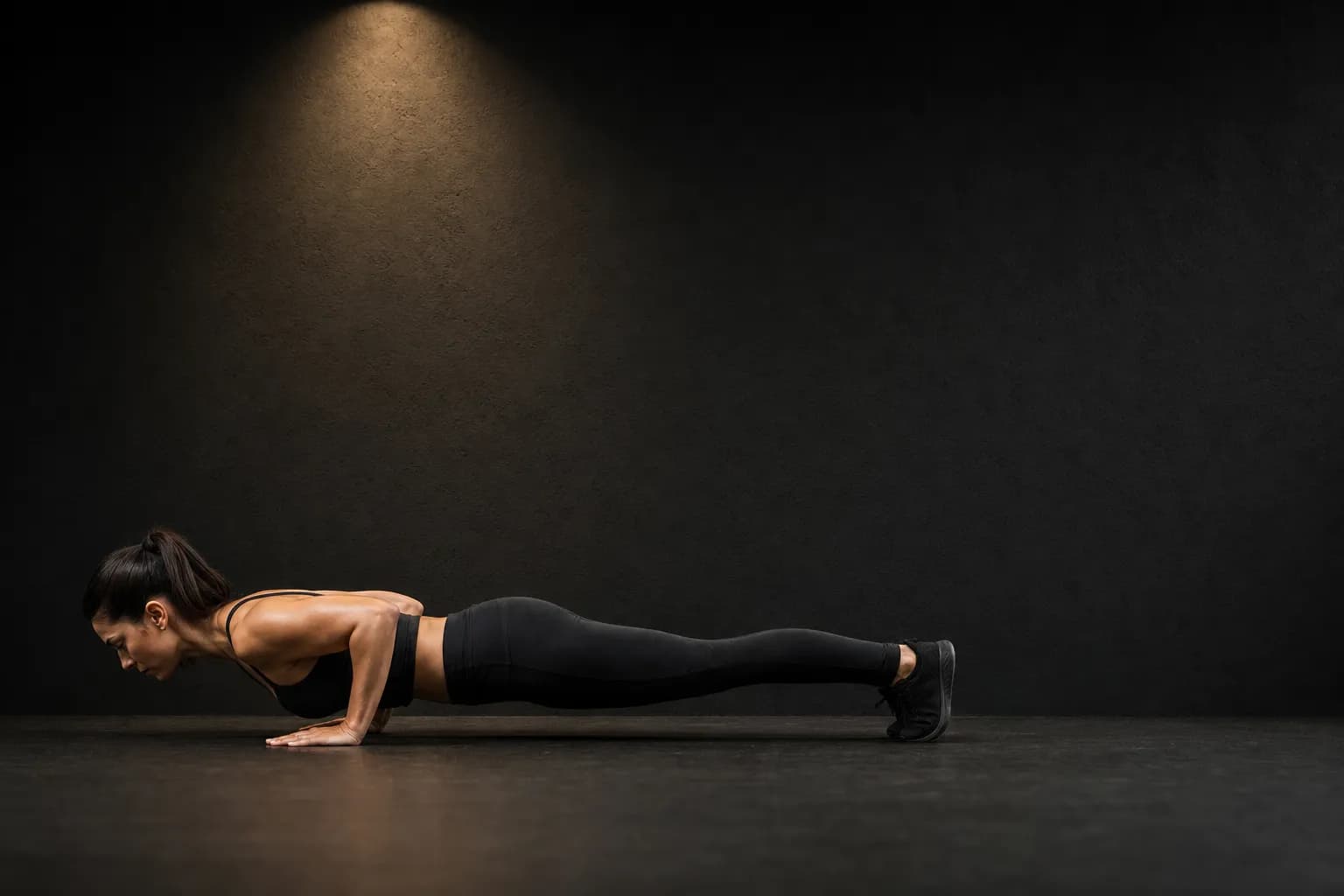
- Floor: the full pushup. Start with sets of what you have, even three.
Sets below failure, and a rep a week
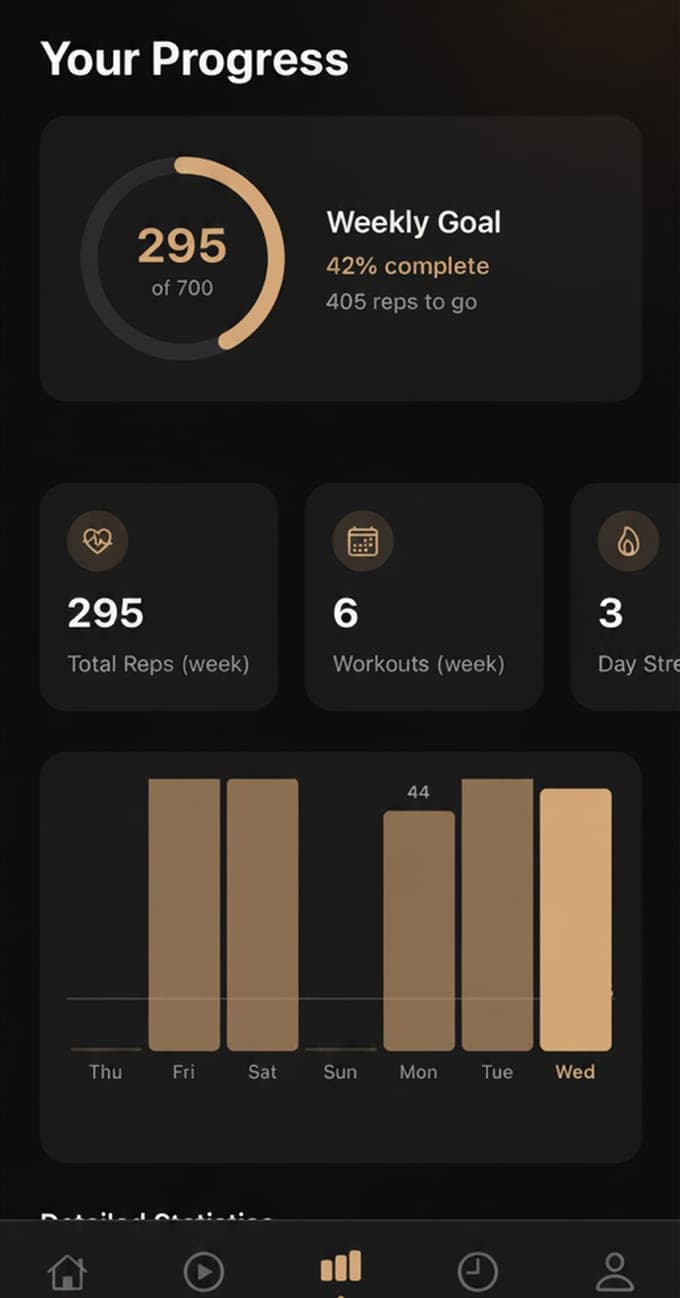
Failure is not the goal; the reps before it are. Take a set you can do with good form, do three or four of them with 60 to 90 seconds between, stopping each one two reps short of the point where the hips would sag, and add one rep to each set the following week. Twelve, thirteen, fourteen. That is slow and it works, because every rep was a good one and the total volume climbed without a bad-form set in it. Push Up Counter's Sets mode runs exactly this, up to 20 sets of 200 with a rest timer of 10 to 300 seconds, and its form score tells you when the last rep of a set was the one too many.
Frequency: three or four days, not seven
Pressing strength is built in the recovery between sessions. Three or four sessions a week with a day between hard ones is the pattern most programs converge on; daily low-volume practice, a few easy sets spread through the day, is a known method as well, popularised by strength coaches under the name greasing the groove, and it works for people who can already do a decent set and who keep each mini-set far from failure. What does not work is a hard set to failure every day, which stalls within a fortnight and often hurts the shoulders.
What the camera can and cannot count on the ladder
The counter is built for the floor. It first checks that the body is roughly horizontal with the hands below the shoulders, so wall and counter pushups, where the body is upright or steeply inclined, usually do not arm the counter at all; treat those steps as training you count yourself. Knee pushups generally do count, since the elbow angle and the shoulder-to-hip line look the same to the camera, though the alignment score reads the line from shoulder to ankle and may mark it. From the low step onward the body is horizontal enough and the count is reliable.
When the number stops moving
Plateaus come from three places: not enough rest, sets too close to failure, or the same stimulus for too long. Take three days off and retest; drop each set by two reps and rebuild; or change the stimulus for a fortnight with slower reps, a pause at the bottom, or the feet on a step. The personal-best record in the app, with its date, is the honest measure of whether a change worked; the max-test guide covers how to take that measurement without wrecking the week.
Questions people also ask
How long does it take to go from 10 to 50 pushups?
With three or four sessions a week of sets below failure and a rep added each week, most people get from a set of ten to a set of thirty or so in two to three months, and to fifty in six to twelve, with big individual differences. Bodyweight, age and sleep move the number more than any program.
Should I do pushups to failure?
Rarely: at a max test every few weeks, not in training. Sets that stop two reps short build the same strength with better form and less soreness, and they leave you able to train again in two days.