The Swedish citizenship test in 2026: how it works, and what is still open
Vishwen Labs
Sweden's citizenship test is law and has been sat once. The Riksdag passed the government's bill on 29 April 2026 by 258 votes to 33, the amended Citizenship Act took effect on 6 June, and the Swedish Council for Higher Education (UHR) held the first civics test on 15 August 2026 in Stockholm: 60 multiple-choice questions, four options, 90 minutes, on paper, in Swedish, for about 1,000 people. Two things are still open in September 2026: the pass mark, which UHR will recommend after analysing the pilot, and the next dates and places, promised for the autumn.
The legislative record
The bill, Skärpta krav för svenskt medborgarskap (prop. 2025/26:175), went to the Riksdag on 13 March 2026 from Migration Minister Johan Forssell, on the back of a 2025 inquiry and the 2021 inquiry into knowledge tests. The Committee on Social Insurance backed it on 28 April; the chamber debated and voted on 29 April 2026, 258 to 33 with 58 absent, against reservations from the Left Party and the Greens. Most of the law entered into force on 6 June 2026; the provisions on the language test in reading and listening take effect on 1 October 2027 or an earlier date the government sets.
What is fixed
From Migrationsverket, the Riksdag and what UHR has published:
- Knowledge of Swedish and of Swedish society is required for citizenship by application, for applicants aged 16 to 66, shown by grades, SFI course D, komvux, folkhögskola or the citizenship test.
- UHR builds, runs and marks the test; Migrationsverket decides who is offered it and sends the letter that lets you register.
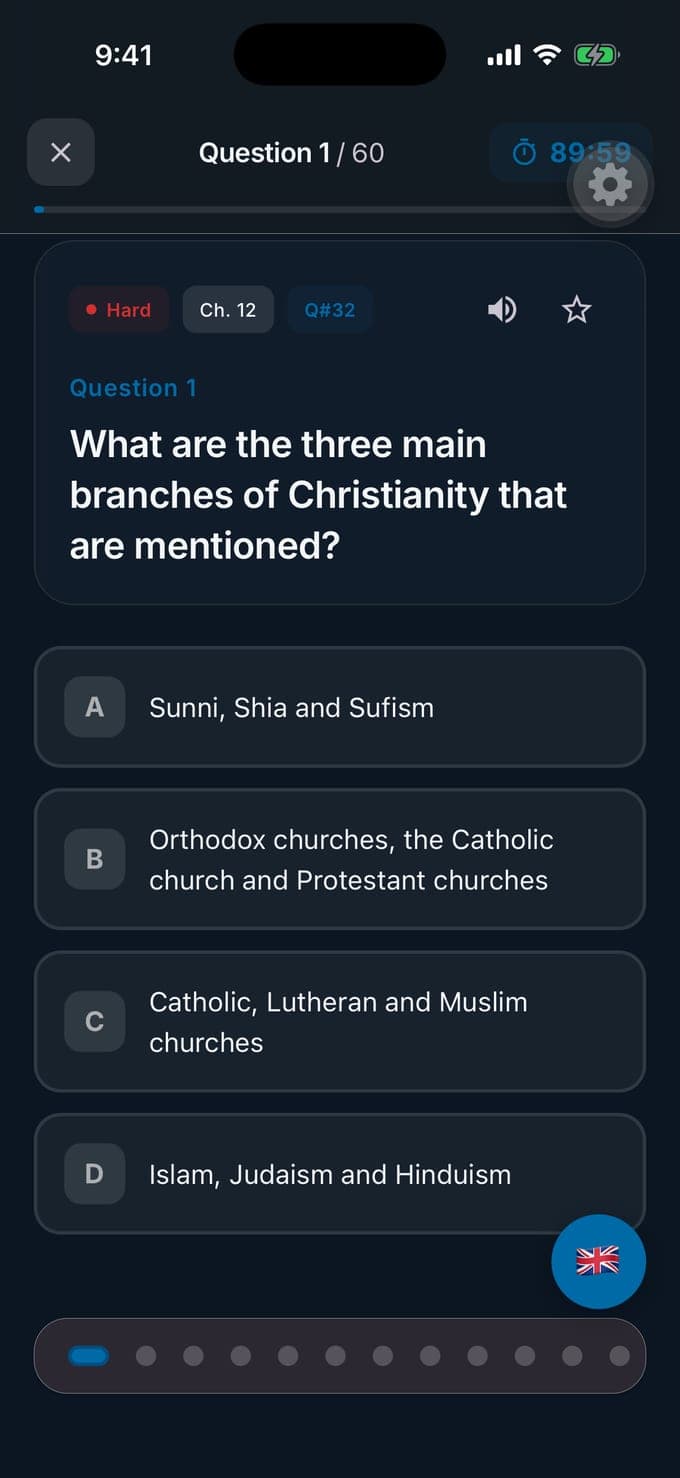
- The civics part: 60 multiple-choice questions with four options, one correct, 90 minutes, in Swedish, on paper at the first sitting, based on Sverige i fokus.
- First sitting: Saturday 15 August 2026 at Stockholmsmässan in Älvsjö, about 1,000 participants, free of charge.
- Fee from 2027: 2,000 kronor per sitting, set by the regulation on the citizenship test (förordning 2026:451), with stateless people who have refugee status or a Swedish travel document exempt.
- The language part, reading and listening at a functional level, by 1 October 2027 at the latest.
- No transitional rules: applications undecided on 6 June 2026 are assessed under the new law.
What is not yet published
The pass mark, above all. UHR said before the first sitting that the level would be set, evaluated and adjusted, and after it that it would analyse the results and present a recommendation for the pass score during the autumn; results for the August candidates were due in the autumn too. Next come the dates and places of further sittings and the reopening of registration, which UHR's registration page said would be announced later.
Several prep sites fill the gap with figures of their own: a pass mark of 70% or 75%, monthly sittings, a digital test. None of that is published. The app uses 72% for its mock and labels it preliminary in the app, on this site and in the store listing, so that it can be replaced the week UHR publishes the real level.
How the first sitting went
SVT spoke to candidates leaving Stockholmsmässan: some found the questions a little tricky, others found them easy, and UHR described the level as roughly that of the end of compulsory school. Registration had filled and closed, with no late registration. Candidates were told results would follow in the autumn. For anyone preparing for a later sitting, the useful facts are the format, the language and the material, all of which are known.
What to watch, and where
UHR's pages on medborgarskapsprovet carry the format, the registration rules and, when they come, the pass level and the dates. Migrationsverket's pages carry the requirement and the exemptions, and it is Migrationsverket's letter that starts the process for you. The Riksdag's documents hold the law itself. Prep sites, this one included, are not the specification.
Medborgarskapsprov is an independent study aid and is not affiliated with the Swedish Council for Higher Education (UHR), the Swedish Migration Agency (Migrationsverket) or any other Swedish authority. UHR's citizenship test is based on the study material Sverige i fokus, which UHR publishes with the National Agency for Education; the app's lessons and questions are its own, written from that material, and each question names it as the source.
Questions people also ask
Has Sweden's citizenship test law been passed?
Yes. The Riksdag approved prop. 2025/26:175 on 29 April 2026 by 258 votes to 33. The amended Citizenship Act took effect on 6 June 2026, and the first civics test was held on 15 August 2026.
Who runs the Swedish citizenship test?
The Swedish Council for Higher Education, UHR, which also runs the university admissions test, develops and administers the citizenship test and publishes the study material Sverige i fokus with the National Agency for Education. Migrationsverket decides who is offered the test.