How to write an NDA
Vishwen Labs

A non-disclosure agreement does four things: it defines what counts as confidential, says what the receiving side may and may not do with it, sets how long the duty lasts, and lists the exceptions where the duty does not apply at all. Everything else is detail. The most common mistakes are defining confidential information so broadly that a court will not enforce it, forgetting the carve-outs, and picking a term that outlives the information's value. This is general information rather than legal advice; for a deal that matters, have a lawyer in your state read the draft.
Mutual or one-way
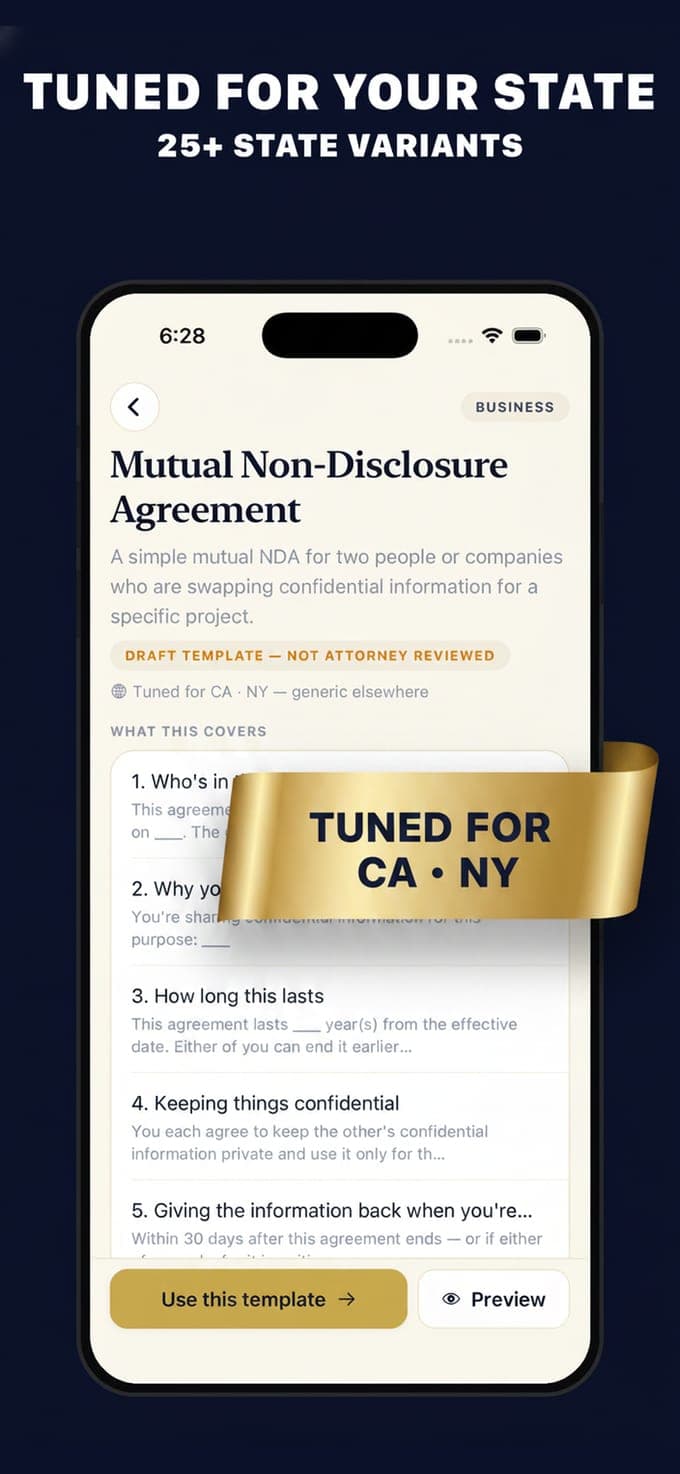
A one-way NDA protects information flowing in one direction: you are pitching an idea, hiring a contractor, or showing a supplier your process. A mutual NDA protects both sides and is the norm when two companies are exploring a deal, because both will end up saying things they would rather not see repeated. Mutual agreements are also easier to negotiate, since neither side is arguing for a position it will not have to live with. Contract Maker carries both, each with California and New York versions alongside the generic US one.
The clauses that do the work
A workable NDA has these, and a plain-English template numbers them:
- The parties and the purpose. Why the information is being shared, which limits what the receiver may use it for.
- The definition of confidential information. Broad enough to cover what matters, specific enough to be meaningful. Marking documents helps but should not be the only trigger.
- The obligations. Keep it secret, use it only for the purpose, share it only with people who need it and who are under the same duty.
- The exclusions. Information already public, already known to the receiver, independently developed without using the disclosure, or received legitimately from someone else.
- The compelled-disclosure clause. What happens when a court or regulator requires disclosure: notice to the other side where allowed, and disclosure limited to what is required.
- The term. How long the duty runs after the agreement ends. Two to five years is common for ordinary business information; trade secrets are often left indefinite.
- Return or destruction. What happens to the documents when the discussion is over.
- Remedies and governing law. What the injured party can ask for, and whose law reads the agreement.
What an NDA cannot do
An NDA cannot stop someone reporting a crime, cooperating with a regulator or responding to a subpoena, and a clause that tries reads badly to a judge. Several states now limit NDAs that would silence someone about harassment or discrimination, and federal law protects certain whistleblowers, which is why many agreements include a short clause saying nothing in them prevents a protected report. An NDA is also not a non-compete: keeping information secret is one thing, and restricting where someone may work next is another, governed by different and much stricter rules.
Getting the term right
The term is the clause people set thoughtlessly. Too short and the information is exposed while it still matters; too long and the receiver may refuse to sign, or a court may decline to enforce a perpetual duty over ordinary business information. A useful test is to ask how long this particular information would hurt you if it got out: a product launch date has a life of months, a customer list a few years, a formula perhaps forever. Write down the answer and use it, rather than copying whatever number the last agreement had.
Before you send it
Read the definition of confidential information and check it covers the thing you are actually about to share. Check the purpose clause describes the real conversation. Make sure both names and addresses are right, since an NDA against the wrong entity protects nobody. Then send it in a form the other side can sign, and keep the signed copy. A signed PDF in a folder beats a beautifully drafted agreement nobody executed.
Contract Maker is a drafting tool from Vishwen Labs, not a law firm. The templates are starting points written in plain English, they are not legal advice, and using the app does not create an attorney-client relationship. Every template says so itself: it is a template to get you started, and for anything important you should talk to a qualified lawyer where you live. The pages here explain what documents usually contain; they do not tell you what to sign.
Questions people also ask
How long should an NDA last?
Two to five years covers most ordinary business information, and trade secrets are often protected for as long as they stay secret. Match the term to how long the information would actually hurt you if disclosed, and expect a counterparty to push back on anything perpetual.
Is a mutual NDA better than a one-way NDA?
It is easier to agree, because both sides live under the same terms, and it fits any conversation where information will flow both ways. A one-way agreement is right when only one side is disclosing, such as a contractor being shown your systems.