What to include in an independent contractor agreement
Vishwen Labs

An independent contractor agreement should answer six questions before the work starts: what is being delivered, by when, for how much, paid on what schedule, who owns the result, and how either side ends it. Add confidentiality and a clause stating the contractor is not an employee, and you have covered what most freelance disputes are actually about. The one thing the agreement cannot do is decide worker classification: calling someone a contractor does not make them one, and the tests that matter come from tax and labour law rather than from the paperwork. General information, not legal advice.
The six questions
Answer these in writing and most freelance arguments never start:
- Scope. What is included, and just as usefully what is not. Vague scope is the single biggest cause of freelance disputes.
- Deliverables and dates. What arrives, in what form, by when, and what happens if a dependency from the client is late.
- Fee and payment terms. Fixed price or rate, deposit, invoice schedule, days to pay, late fee, expenses and who approves them.
- Ownership of the work. Who owns the deliverables, when ownership transfers, and what the contractor keeps or may reuse.
- Confidentiality. What the contractor learns and cannot repeat, usually with the same carve-outs as an NDA.
- Term and termination. How the engagement ends, how much notice, and what is owed for work in progress.
Who owns the work
This is the clause freelancers and clients most often assume differently about. In the United States, the person who creates a work generally owns the copyright unless it is a work made for hire under the statute or the rights are assigned in writing. Employees create works for hire automatically; contractors do not, except for particular commissioned categories, and even then only with a written agreement. So a client who wants to own the deliverables needs a written assignment, and a contractor who wants to keep their tools, templates and reusable code needs that written down too. Contract Maker has separate IP assignment and work-for-hire templates for the cases where the agreement needs its own document.
The classification trap
A contract can say the contractor is an independent contractor, is responsible for their own taxes and gets no benefits, and it should. What it cannot do is settle the question. The Internal Revenue Service looks at behavioural control, financial control and the relationship; several states apply stricter tests, California's ABC test being the best known, under which a worker is presumed an employee unless three conditions are met. Misclassification is expensive, and the risk sits with the hiring side. If the work looks like a job, with set hours, supervision and no other clients, the label in the contract will not save anyone.
MSA plus SOW, or one agreement
For a single project, one agreement with the scope inside it is simpler. For an ongoing relationship, the usual pattern is a master services agreement that sets the legal terms once, plus a short statement of work for each project with the scope, dates and fee. The MSA rarely changes; the SOWs change constantly. It saves negotiating indemnities every time someone wants a new landing page, and it keeps the fee conversation in a document that is easy to sign.
Before signing
Check the payment terms against your own cash flow, not the client's convenience. Check that termination for convenience, if it is there, still pays for work already done. Check the ownership clause says what you both said out loud. And check the names: contracting with a person when you meant to contract with their company, or the other way round, is a problem that only shows up when you need to enforce something.
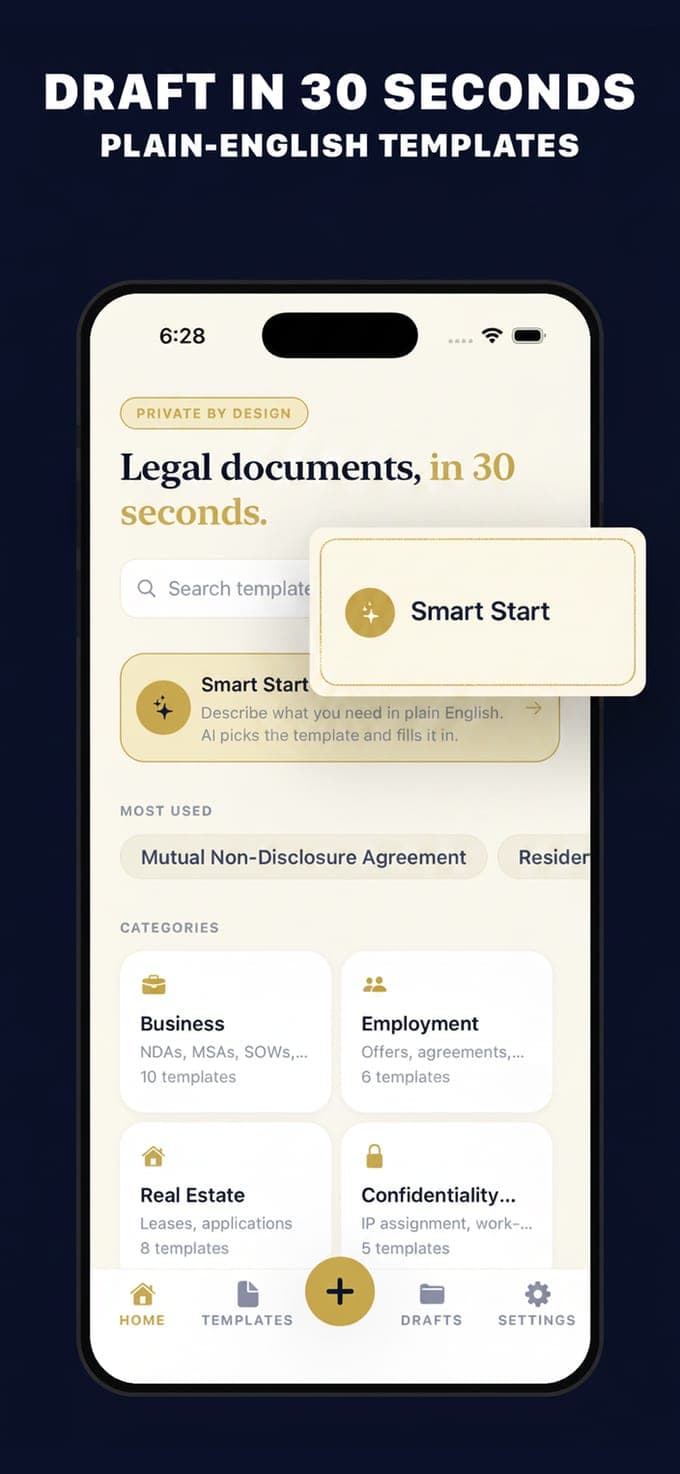
Contract Maker is a drafting tool from Vishwen Labs, not a law firm. The templates are starting points written in plain English, they are not legal advice, and using the app does not create an attorney-client relationship. Every template says so itself: it is a template to get you started, and for anything important you should talk to a qualified lawyer where you live. The pages here explain what documents usually contain; they do not tell you what to sign.
Questions people also ask
Does a contractor own the work if the contract says nothing?
Usually yes in the United States. Copyright starts with the creator, and a contractor is not an employee, so ownership transfers only through a written assignment or a work-made-for-hire agreement in one of the statutory categories. Put it in writing either way.
Can a contract make someone an independent contractor?
No. The label helps show intention but classification is decided by how the work actually happens, under IRS and state tests. If the hiring side controls the hours, the methods and the tools, the worker may be an employee whatever the agreement says.