The difference between an estimate, a quote and an invoice
Vishwen Labs

An estimate is an informed guess at what a job will cost, a quote is a fixed price the client can accept, and an invoice is a demand for payment for work you have already done. The three documents can look almost identical on paper. What separates them is how tightly you are bound by the number printed on the page.
An estimate is a considered guess at the cost
Trades write estimates because you cannot price a rewire until the floorboards are up. An estimate is what you expect the job to cost, worked out from what you can see on the day. The figure is allowed to move, which is why the document has to say what it assumes: twelve hours of labour, materials priced this week. Put your assumptions next to the number, and put the word estimate somewhere the client will read it. A verbal estimate is still an estimate, though the version each of you remembers six weeks later will not match.
A quote is a fixed price the client can accept
Fixing the price is what turns a quote into a quote. It names one figure for one scope of work, and if the client accepts inside the validity window you are expected to honour it. Two weeks to a month is the usual window. Should your supplier put steel up 8% in week three, that cost lands on you unless the quote said otherwise. So a quote needs harder edges than an estimate: a clear line between what is included and what is excluded, and a date the price expires. Where one part of a job genuinely cannot be priced yet, quote the part you can and estimate the remainder separately, labelled that way on the page.
An invoice asks for payment once the work is done
The invoice comes after delivery, or after an agreed milestone, and asks for a specific sum by a specific date. It carries a unique invoice number, an issue date and a due date, your business and tax details, the client's details, the line items and the total. Payment terms belong on it too, along with the account details you want the money sent to. It also does something the other two never do: it enters your books. An estimate sits in a folder and affects nothing. An invoice is the record your accountant works from and, in most countries, the document a tax authority expects to find behind the money.
What changes legally between an estimate, a quote and an invoice
The words on the page decide which document you have sent. Naming the file quote.pdf changes nothing. Broadly, an accepted quote is treated as an offer the client has taken up, so a contract now exists at that price, while an estimate is read as a non-binding indication of cost. That is the general position in England and the United States, but the detail varies by country and by trade, and consumer work often carries extra rules on top. Check your local position before you lean on a particular form of words. None of this is legal advice.
- Estimate: approximate, non-binding, revisable while the job runs, and usually with no expiry date on it.
- Quote: one fixed price, binding once the client accepts, carries an expiry, and any change needs a written variation.
- Invoice: a fixed amount owed by a stated date, numbered in sequence, and entered in your accounts and tax records.
How an approved estimate becomes an invoice
Approval is the point at which the paperwork should stop being retyped. Copy the approved line items across unchanged, keep the descriptions word for word, and cite the estimate number on the invoice so the client's finance team can match the two documents without asking you. Where the final figure differs from the approved one, show the difference as its own line, with a note saying what was agreed and when. A client left to work out why $3,000 became $3,400 will hold the invoice until somebody explains it.
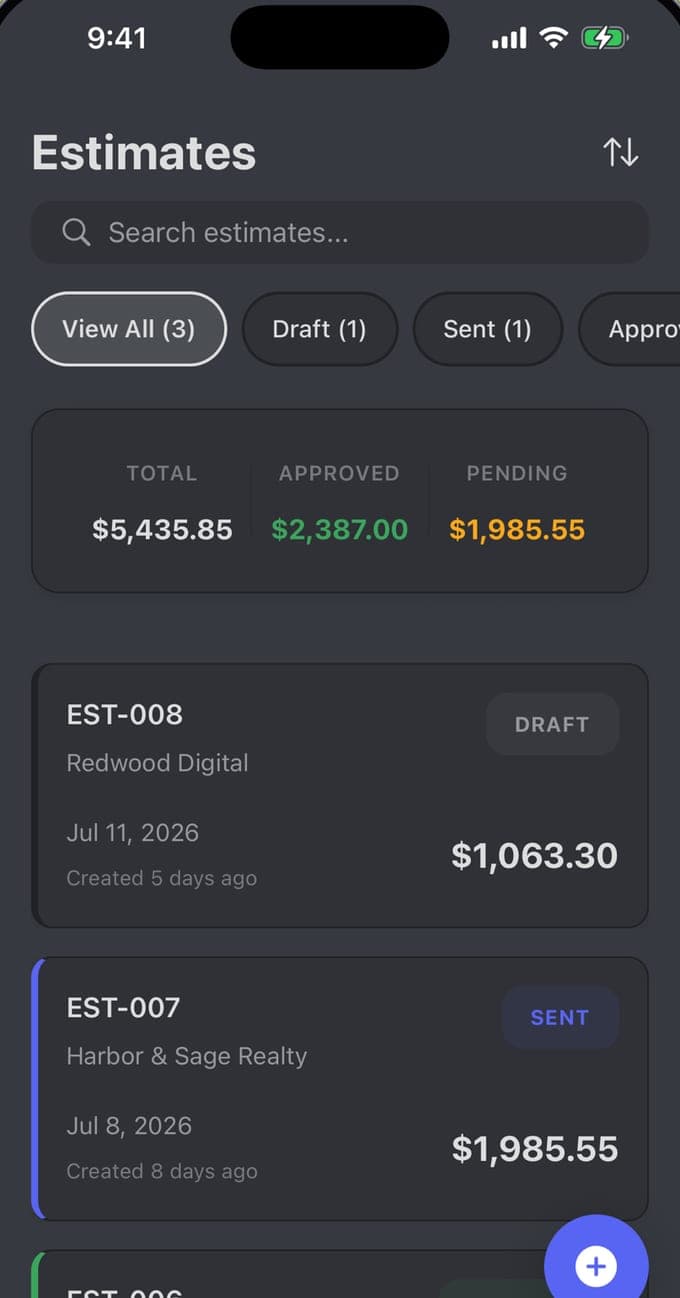
Invoice Pro keeps estimates in a tab of their own, each one marked draft, sent or approved. The app carries the line items and their tax rates into an invoice, so the approved figure and the billed figure agree unless you deliberately change one of them.
Choosing between an estimate, a quote and an invoice
Which one you send is mostly a question of how much you actually know. A bathroom refit priced from a photograph is an estimate; the same job after you have been round and lifted a panel can be quoted. Fixed deliverables with a written brief should be quoted, because the client is holding your number up against somebody else's. Open-ended hourly work is estimated for the month and invoiced on the hours you really worked. A deposit request is an invoice even though nothing has been built yet, since it names an amount and a due date and goes straight into your accounts.
Questions people also ask
Can I charge more than my estimate?
Usually yes, provided the document was labelled an estimate and you tell the client about the extra cost before you incur it. The safe practice is a short written variation, agreed by email, before the additional work starts. Some countries cap how far a final bill may exceed an estimate on consumer jobs, so check the rule where you trade.
How long should a quote stay valid before it expires?
Fourteen to thirty days is the common window, and the expiry date belongs on the quote itself rather than in a covering email. Shorten it when your costs move, for example on imported materials or anything priced in another currency. Once the date passes you can reissue at a new price without breaking anything you promised.