How to get clients to pay invoices on time
Vishwen Labs

Clients pay on time when the due date is a specific calendar date and paying takes under a minute of their time. Most late payments have nothing to do with the work. They are invoices sitting in an inbox with a vague due date and nobody chasing them until the money is already six weeks overdue.
Chase an unpaid invoice
- Three days before the due date. Send one line confirming the invoice falls due on Friday and asking whether anything is needed from you. No apology and no preamble.
- On the due date. Reply in the same thread if nothing has arrived. Restate the amount outstanding and the payment details so the client does not have to reopen the PDF.
- Seven days after the due date. Phone whoever controls the budget instead of emailing a third time, then confirm in writing what you agreed and when the money will move.
- Fourteen days after the due date. Apply the late fee already stated in your terms, reissue the invoice with the fee as its own line item, and say plainly when new work stops.
Payment terms that get invoices paid on time
"Payment due on receipt" and "net 30" get read differently by different accounts departments. Net 30 from the invoice date and net 30 from the end of the month are different weeks, and the client's system will pick one without telling you. Write the date itself: Due 14 October 2026. One line, and nobody has to do arithmetic to work out when you expect the money.
Shorter terms help more than most people expect. Net 14 catches a fortnightly payment run where net 30 leaves the invoice waiting for the following month, and a client who genuinely needs longer will say so. Agree the terms before the work starts and repeat them word for word on the invoice, so the document confirms something already settled.
- The due date written as a calendar date, so no one has to calculate it
- Accepted payment methods, with the account details needed to use them
- The late fee, as a percentage and a period
- The name of the person at the client's end who owns the invoice
Invoicing the day you finish gets you paid sooner
Monthly batching is the most expensive habit in freelance billing. Finish a job on 2 October, hold it for the 31 October run, offer net 30, and the money lands in December. The same job invoiced on 2 October at net 14 is paid before the month is out.
There is a second reason to send it immediately. The person who approved the work still remembers approving it. Six weeks later they have had two other projects and possibly a new job title, and your invoice needs explaining before anyone will pay it. Invoice Pro is built for that timing: the invoice is written on the phone, the PDF renders on the device with no internet connection, and you can share it from the client's kitchen before you have packed up.
Make it easy for a client to pay the invoice
Every question a client has to ask before they can pay adds days. Which account. Do you take Zelle. Is the sort code on last year's invoice still current. The answers belong on the document itself, where whoever processes the payment can see them without going back to you.
The PDF Invoice Pro renders carries a PAYMENT DETAILS block beneath the notes and terms, holding bank name, account holder, account number or IBAN, routing, SWIFT or sort code, and a Zelle address. The app generates the PDF and shares it; it does not take card payments or collect money on your behalf, so those printed details are what the client actually works from. Enter them once in your business settings and every invoice after that carries them.
A chase sequence that starts before the invoice is due
Three days ahead of the due date, a one-line note reads as housekeeping. It also lands while the client can still get you into that week's payment run, which is why it works better than a first contact on day 31.
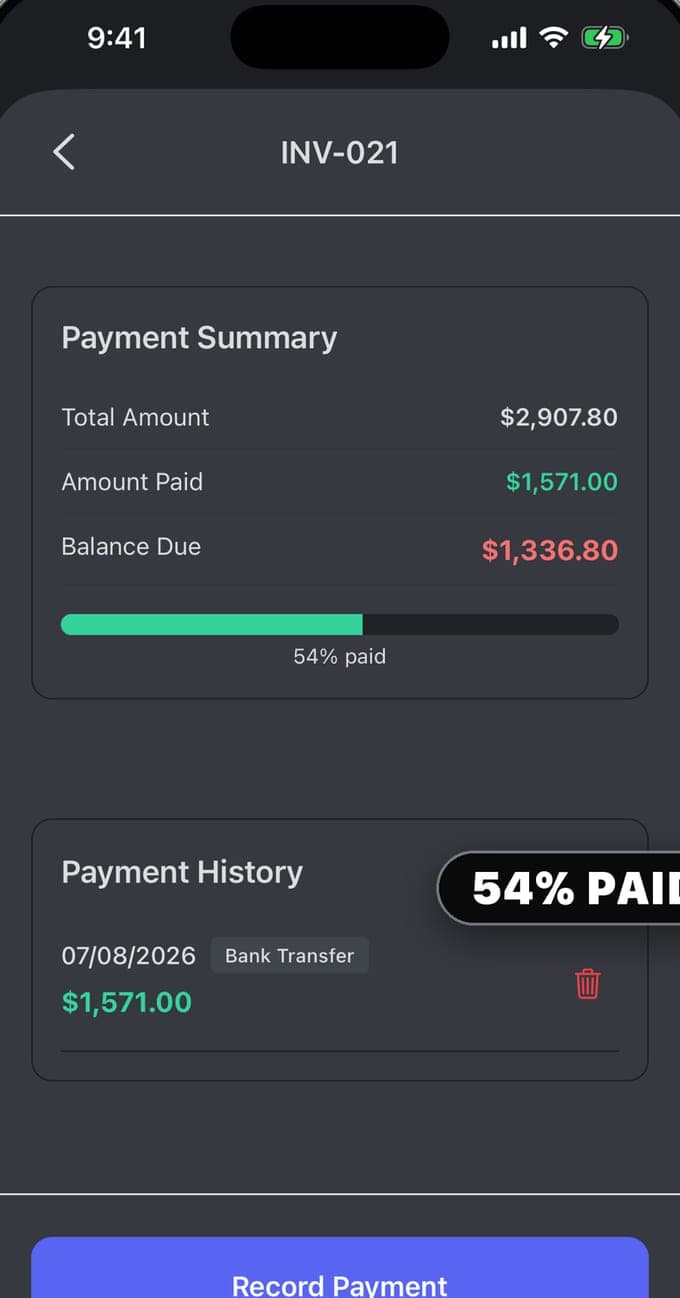
Before any of it, check what is genuinely outstanding. A client who paid half up front is not late on the full amount, and chasing the wrong figure costs you the high ground. Record each payment as it arrives, with its date and method, and the number in front of you is the balance due.
Late fees that make clients pay on time
You will end up waiving a late fee that first appears in a reminder email. The number has to sit in the terms the client agreed to and on the face of every invoice, starting with the first one you send them. Between 1% and 1.5% per month is the usual band for small commercial work.
Whether that rate is enforceable depends on where you and your client are, and some places cap it, so check your local rule before printing a figure. In the UK, the Late Payment of Commercial Debts legislation gives you statutory interest and a fixed compensation sum on business-to-business invoices even when the contract says nothing. This is not legal advice. Invoice Pro has a Terms field on the invoice, and whatever you type there prints under the line table on the PDF.
Know which invoices are overdue before the client does
Most people who are owed money cannot say, without opening something, how much is outstanding and how old the oldest unpaid invoice is. Late payers live in that gap, and the ones who are late on purpose work out quickly which suppliers are watching.
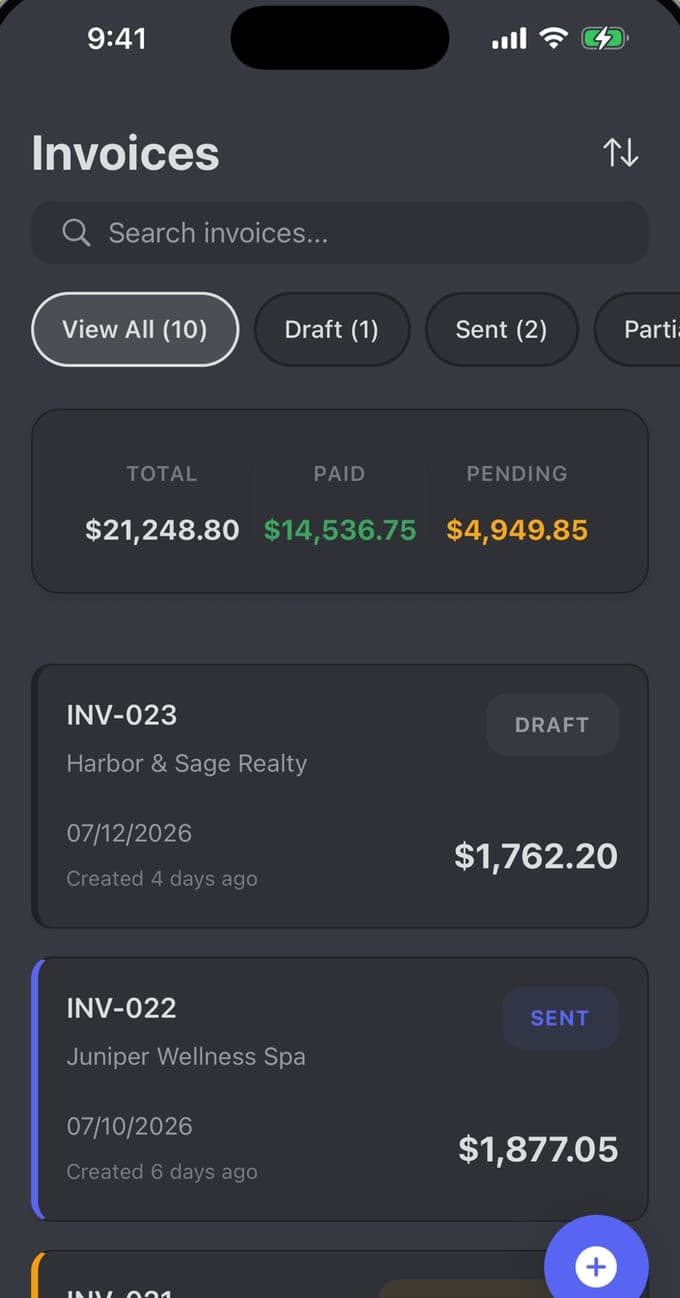
The invoices list in Invoice Pro filters by status: View All, Draft, Sent and Partially paid. A summary strip sits above the rows; in the store capture it reads $21,248.80 total against $14,536.75 paid, leaving $4,949.85 pending. Each row shows the client, the date and how long ago it was created, so anything under Sent and past its due date is your chase list for the week.
Questions people also ask
How long should I wait before chasing an unpaid invoice?
Send the first note three days before the due date and the second on the day it falls due. If nothing has moved seven days later, phone whoever controls the budget instead of emailing again, then confirm in writing what you agreed. Leaving the first contact until a month has passed turns a slow payment into a collections problem.
Does asking for a deposit up front make clients pay the final invoice on time?
Usually. A client who pays a 30% or 50% deposit promptly has already proved their approval process works and has money committed to the job. Record the deposit against the invoice so the document shows a balance due, which removes the most common reason a final invoice sits unpaid while someone checks what was already sent.