How to learn times tables fast
Vishwen Labs
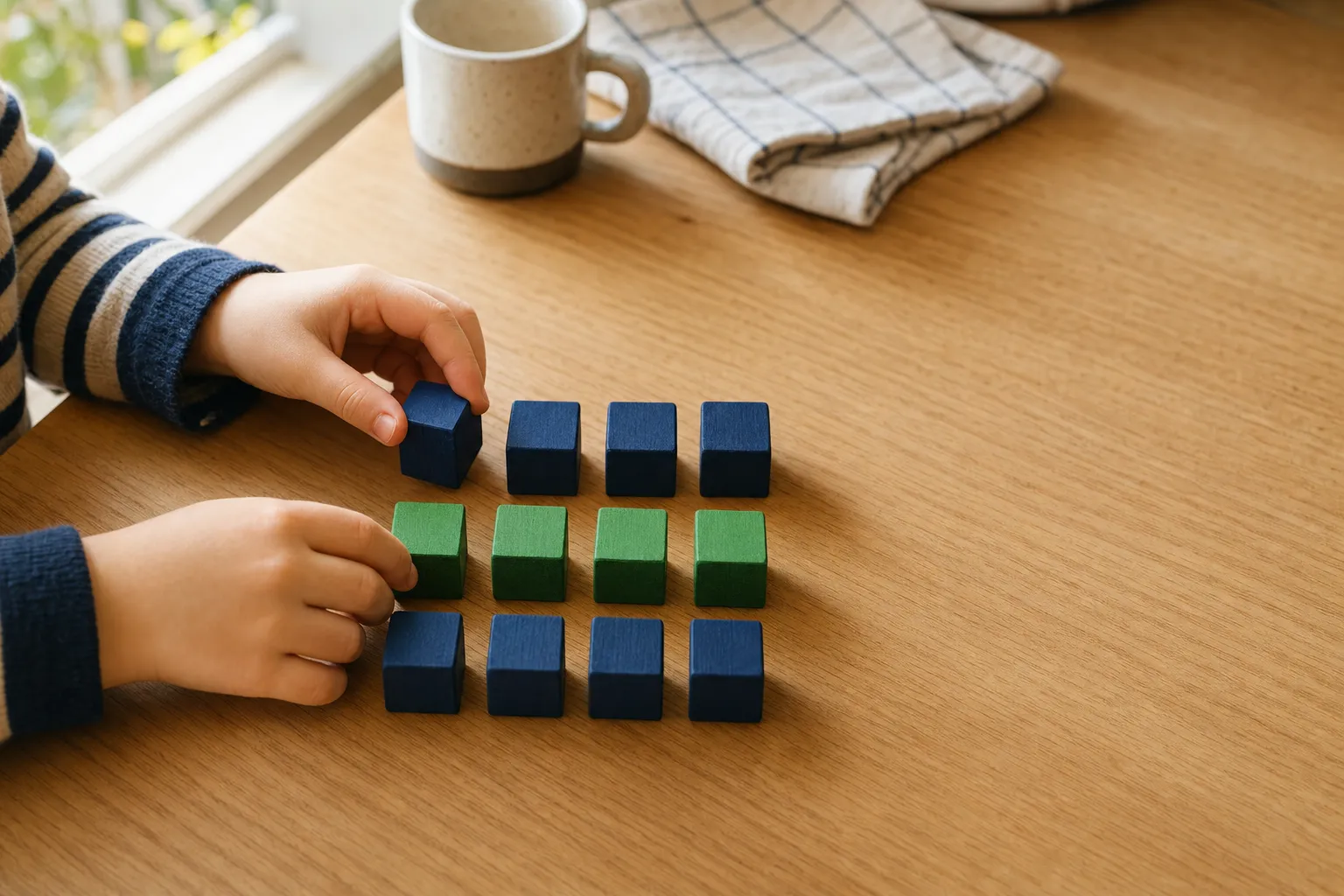
The fastest way to learn times tables is to shrink the job before starting, then practise recall in short daily sessions rather than long weekly ones. Twelve tables look like 144 facts, but 3 × 7 and 7 × 3 are one fact to memory, the 1s and 10s cost nothing, and the 2s, 5s and 11s follow patterns most children pick up in a day. What is left is about 28 facts that need real practice, and those go in fastest when the child has to produce the answer from memory, gets some wrong, and meets the missed ones again before the day is out. Ten minutes a day for a few weeks beats an hour on Sunday.
Shrink the job first
Count what actually has to be memorised. The tables from 1 to 12 hold 144 facts, but multiplication commutes, so 4 × 9 and 9 × 4 are the same fact: 78 distinct facts. Take out the 1s and the 10s, which need a rule rather than memory, and 55 remain. The 2s are doubling, the 5s end in 0 or 5, and the 11s repeat the digit up to 99; once a child has those three patterns, 28 facts are left, the products of 3, 4, 6, 7, 8, 9 and 12 with each other. That is the real job, and it is small enough to finish in a month.
Recall beats rereading
Reading a table, chanting it, or copying it out feels like learning and produces very little. What builds a fact in memory is the effort of retrieving it: seeing 7 × 8 and having to produce 56 without the table in front of you. Decades of classroom studies on the testing effect say the same thing in different words, and the practical rule is simple. Cover the answers. Ask facts out of order, because a child who can only reach 7 × 8 by counting up from 7 × 1 does not know 7 × 8. And let the child be wrong; a miss followed by the right answer is worth more than ten reads.
Short sessions, with the misses coming back
Ten minutes a day, every day, beats a long weekly session because forgetting is what does the work: a fact recalled after a gap sticks better than one recalled a second later. Within the ten minutes, bring back anything missed. On paper that means a pile of missed cards asked again at the end; in Multiplication: Times Tables a missed fact goes into a review queue that asks it again after ten minutes, then a day later, and drops it after three right answers in a row. The child does not decide what to revise; the misses do.
Speed last, not first
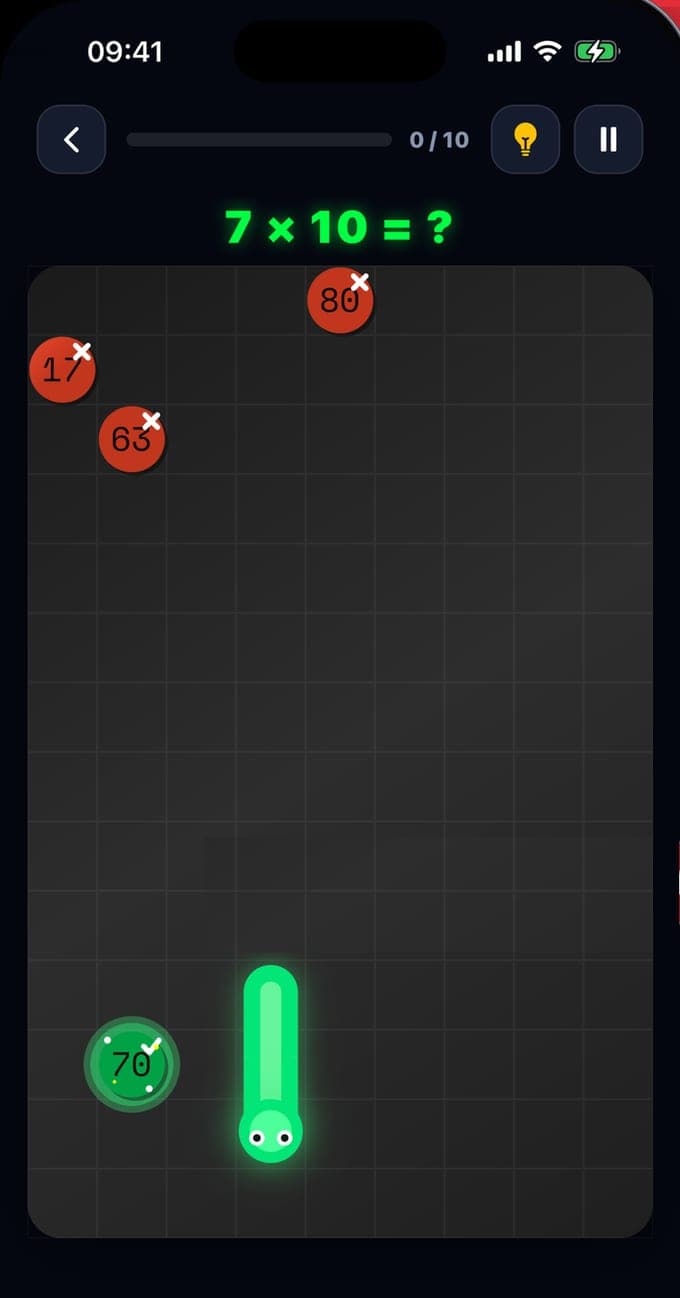
Accuracy first, then speed. A child who answers 6 × 7 correctly in five seconds knows it; the aim is to bring that to a second or two, because at that point the fact stops costing attention and long multiplication and fractions become possible. Timed practice is the way to do it once the fact is reliable, and it is what school checks measure: the English Year 4 check gives six seconds a question. The snake game does this on its own terms, since the snake moves faster after every correct answer, from 800 milliseconds a step down to 200, so a known table plays as a fast game and a new one plays slowly.
A four-week plan
A schedule that follows the shrinking above, ten minutes a day:
- Week 1: the 2s, 5s and 10s, then the 1s and 11s as rules. Mixed questions from all of them by Friday.
- Week 2: the 4s as doubled 2s and the 3s. Keep asking the week-1 tables mixed in.
- Week 3: the 6s as doubled 3s, the 9s with the finger trick and the digit check, the 8s as doubled 4s.
- Week 4: the 7s, which by now have only 7 × 7 left to learn, and the 12s. Then mixed, timed practice on everything.
Questions people also ask
How long does it take to learn times tables?
With ten minutes of recall practice a day, most children have the tables to 12 reliable in four to eight weeks and fast in a couple of months more. The spread comes from the starting point: a child who already has the 2s, 5s and 10s is more than halfway there.
Is chanting times tables a good way to learn them?
It teaches the sequence, which helps with the pattern of a table and with counting up to an answer. It does not teach recall of a single fact out of order, which is what tests, mental arithmetic and later maths need. Chant for a week if the child enjoys it, then switch to questions out of order.