What order should a child learn times tables in?
Vishwen Labs
Learn the times tables in roughly this order: 10, 2 and 5 first, then 4 as the doubled 2s, 3, 11, 6 as the doubled 3s, 9 as ten times minus one, 8 as the doubled 4s, then 7 and finally 12. It is close to the order schools in England use, which sets the 2, 5 and 10 tables for Year 2 and the 3, 4 and 8 tables for Year 3, and it front-loads the tables with patterns so that each new one leans on one already known. The 7s come last not because they are hard in themselves but because by then most of their facts have been met from the other side: 7 × 3 was learned with the 3s, 7 × 8 with the 8s.
Why not 1 to 12 in order
Counting order puts the 6s and 7s, the two tables with the fewest patterns, in the middle of the sequence, right after the 5s, when a child has the least to lean on. It also leaves the 10s and 11s, the easiest tables of all, until the end. Ordering by difficulty and by dependence instead means each table is mostly known before it is started: the 4s are the 2s doubled, the 8s are the 4s doubled, the 6s are the 3s doubled, and the 9s are the 10s with one lot taken away.
The order, table by table
With the reason each one sits where it does:
- 10s: the place-value table; 10 × n is n with a zero. A day.
- 2s: doubling, which children already do. The 1s and 0s can be stated as rules alongside.
- 5s: half of the 10s, ending in 5 or 0, and the clock face makes them familiar.
- 4s: double the 2s. 4 × 7 is 14 doubled.
- 3s: the first table that needs memory; small enough to take in a week.
- 11s: 11 × n repeats the digit up to 9; 11 × 11 and 11 × 12 are learned as two facts.
- 6s: double the 3s, and 6 times an even number ends in that number (6 × 4 = 24, 6 × 8 = 48).
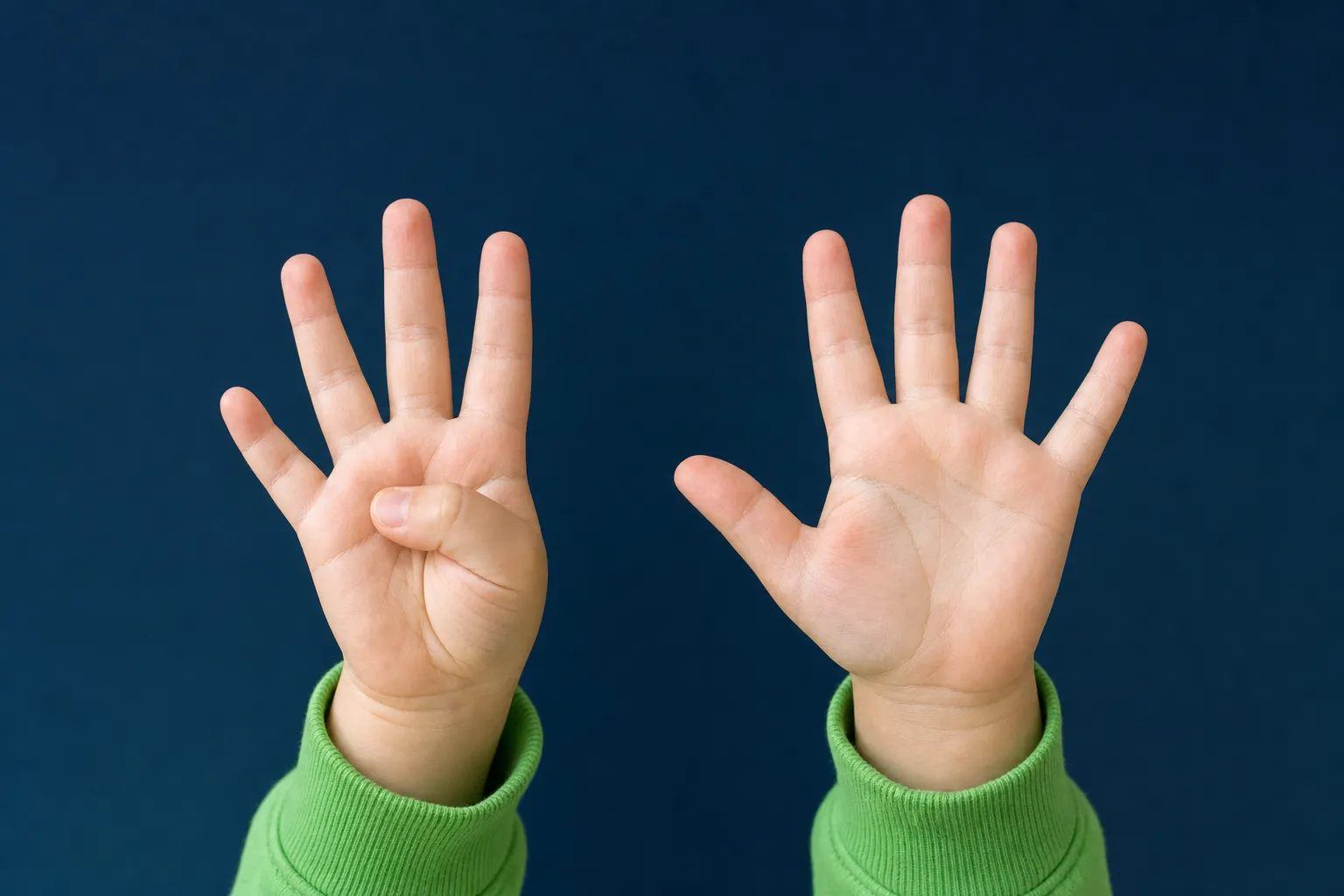
- 9s: 10 × n minus n, the finger trick, and the digits of each answer add to nine.
- 8s: double the 4s. By now most of the 8s are known from the 2s, 3s, 4s, 5s and 6s.
- 7s: only 7 × 7 is new once the 8s, 9s and 12s are in place, and 7 × 12 if the 12s come later.
- 12s: 10 × n plus 2 × n, both already known.
What the app does with the order
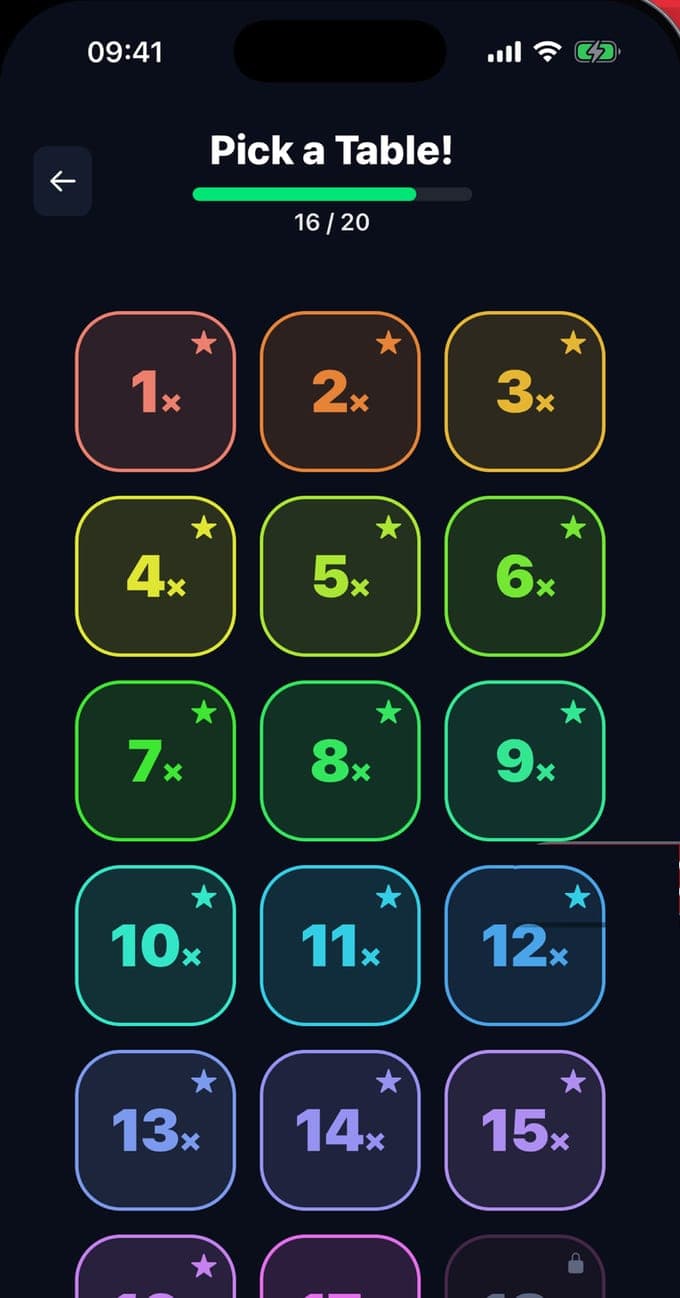
Multiplication: Times Tables opens its tables in numerical order: the 1s and 2s from the start, and each further table when the one before it is mastered by finishing its timed test. That is the counting order rather than the one above, so a parent who wants to follow the difficulty order can steer: play the 2s to mastery, then the 3s and 4s, and let the 5s and 10s open quickly since they are the easiest. The levels are the other route through the app. Level 5 mixes the 1s to the 5s, level 12 mixes the 1s to the 12s, and level 20 mixes everything, which is where the out-of-order recall a test needs gets practised.
Past 12: the 13 to 20 tables
No school curriculum in England, the United States or Australia asks for tables beyond 12 × 12, and the American and Australian standards stop at 10 × 10. The app carries on to 20 for children who have finished the school set, and the same order logic applies: the 20s are the 2s with a zero, the 15s are the 10s plus the 5s, the 14s are the 7s doubled, and the 13s, 17s and 19s are the ones that need memory. They are a bonus, not a requirement.
Questions people also ask
Should the 12 times table be learned before the 11s?
No. The 11s are a pattern up to 99 and take an afternoon; the 12s need the 10s and the 2s in place, and 12 × 7, 12 × 8 and 12 × 9 need memory. Do the 11s early and the 12s last.
Is it worth learning tables past 12?
For school, no; the tests stop at 12 × 12 or 10 × 10. For a child who enjoys them, the 13 to 20 tables are useful mental arithmetic and the app has them, but the school tables should be fast first.