Times tables games vs flashcards
Vishwen Labs
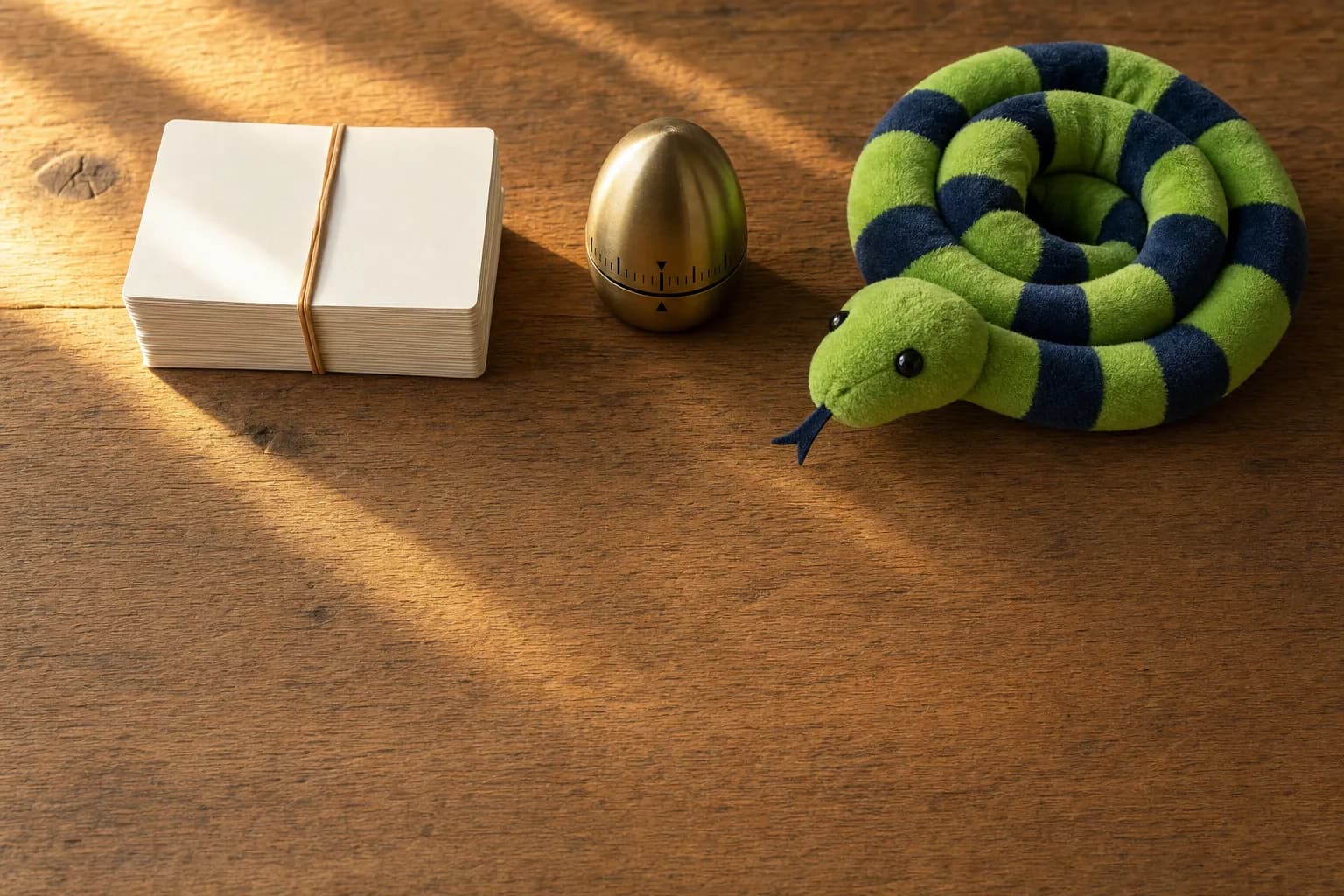
Flashcards and games teach the same thing, recall of a product from its question, and the difference is in what each does well. A deck of cards is the purest recall practice there is and makes the misses visible as a pile, but it needs an adult to run it and most children stop after a few minutes. A game supplies the repetitions on its own, because a child will play it unasked, but a badly made one lets the child win by pattern-matching, guessing or speed of tapping. The practical answer is both: cards for the handful of stubborn facts, a game for the volume, and either one every day rather than a long session at the weekend.
What flashcards do well
A card shows the question and hides the answer, which is exactly the shape of recall. Nothing on the card hints at the product; the child produces it or does not. Sorting the deck into a known pile and a missed pile after each pass shows both of you where the work is, and shuffling gives the out-of-order questions that chanting never does. A set of cards costs nothing, works in the car, and can be cut down to the 28 facts that need memory once the patterned tables are known. The weaknesses are the ones every parent has met: someone has to hold the deck, the child's attention lasts five minutes, and a deck does not remember which facts were missed on Tuesday.
What a game does well
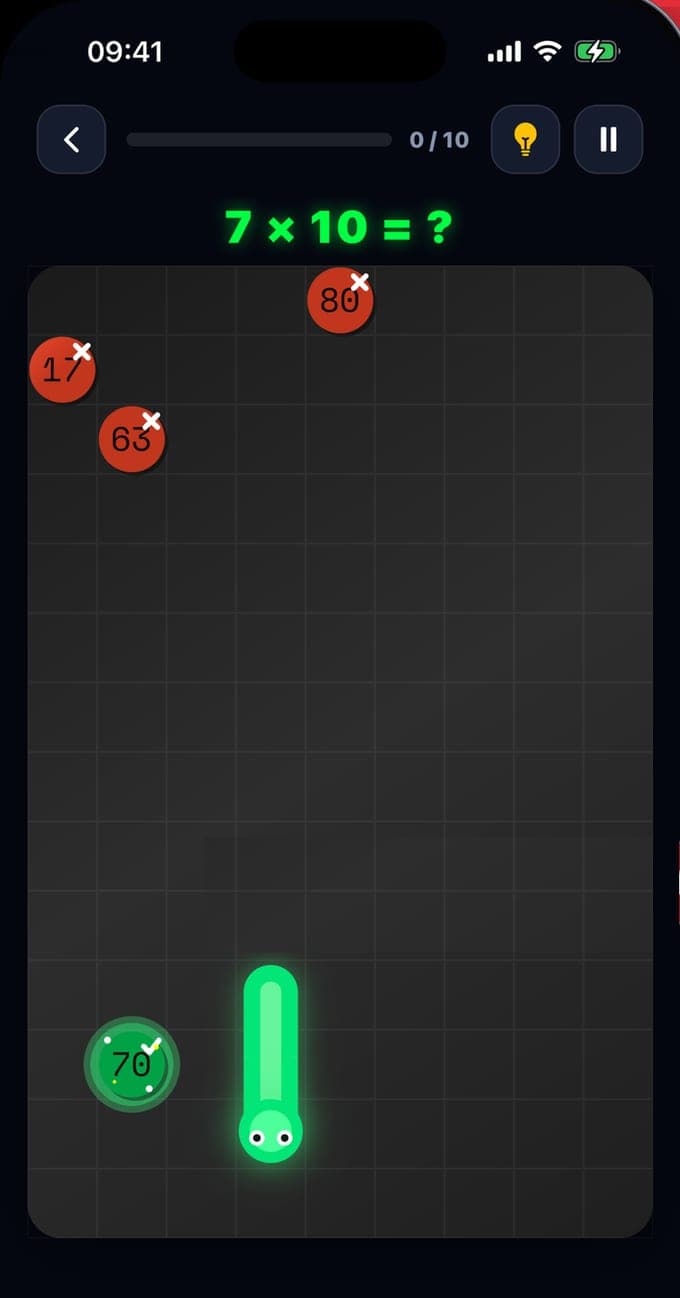
Volume. A child who plays a game for ten minutes without being asked has answered more questions than most flashcard sessions manage, and has done it on days the parent was busy. A game can also keep the record a deck cannot: which facts were missed, when, and when they are due again. The condition is that the game must be practice and not decoration. Three tests separate the two. The child must produce or select the specific answer, not tap anything glowing. The wrong options must be near misses, because a choice between 56, 63 and 49 tests knowledge and a choice between 56, 12 and 90 tests nothing. And a miss must come back later, not vanish behind a sound effect.
Where games go wrong
The common failures are worth naming, since they are what parents are wary of. Multiple choice with far-apart options rewards elimination rather than recall. Points for speed without a cost for errors teach fast guessing. Rewards that arrive whatever the answer, a coin per tap, make the maths the obstacle between the child and the reward rather than the game. And advertising in a children's app, apart from everything else, breaks the ten minutes into pieces. Multiplication: Times Tables was built against those failures: the wrong bubbles are the neighbouring products, a wrong answer sends the fact to review, the snake's speed rises only with correct answers, the creatures grow only as facts are learned, and there are no ads.
A week that uses both
A routine for a child working on one new table:
- Monday to Thursday: ten minutes of the game on the new table, then the review queue. The app keeps the miss list.
- Friday: a flashcard pass over the new table and the two before it, out of order. Whatever lands in the missed pile becomes the weekend's cards.
- Saturday and Sunday: the missed cards only, twice a day, a minute each time. Five cards is normal.
- Any day: the table's timed test in the app when the child asks for it, and a level to mix the tables so far.
The honest comparison
Cards win on purity and cost; a good game wins on repetitions and record-keeping; both lose to a child who does neither. What matters is the daily ten minutes of producing answers from memory with the misses coming back, and whichever tool gets that done in your house is the better one. In most houses it is the game on the ordinary days and the cards in the week before a test.
Questions people also ask
Are multiple-choice times tables games worse than typing the answer?
Only when the wrong options are obviously wrong. Typed answers are pure recall; a choice between near misses such as 54, 56 and 63 is close to it, since the child has to know which is right rather than merely recognise it. A choice between 56, 12 and 90 is elimination and teaches little.
How many minutes a day should a child practise times tables?
About ten, every day, is enough for most children and more than most manage. The app's daily goal can be set to 5, 10 or 15 questions; 10 is the default and takes a few minutes of play.