How to tell if a Yu-Gi-Oh card is fake
Vishwen Labs
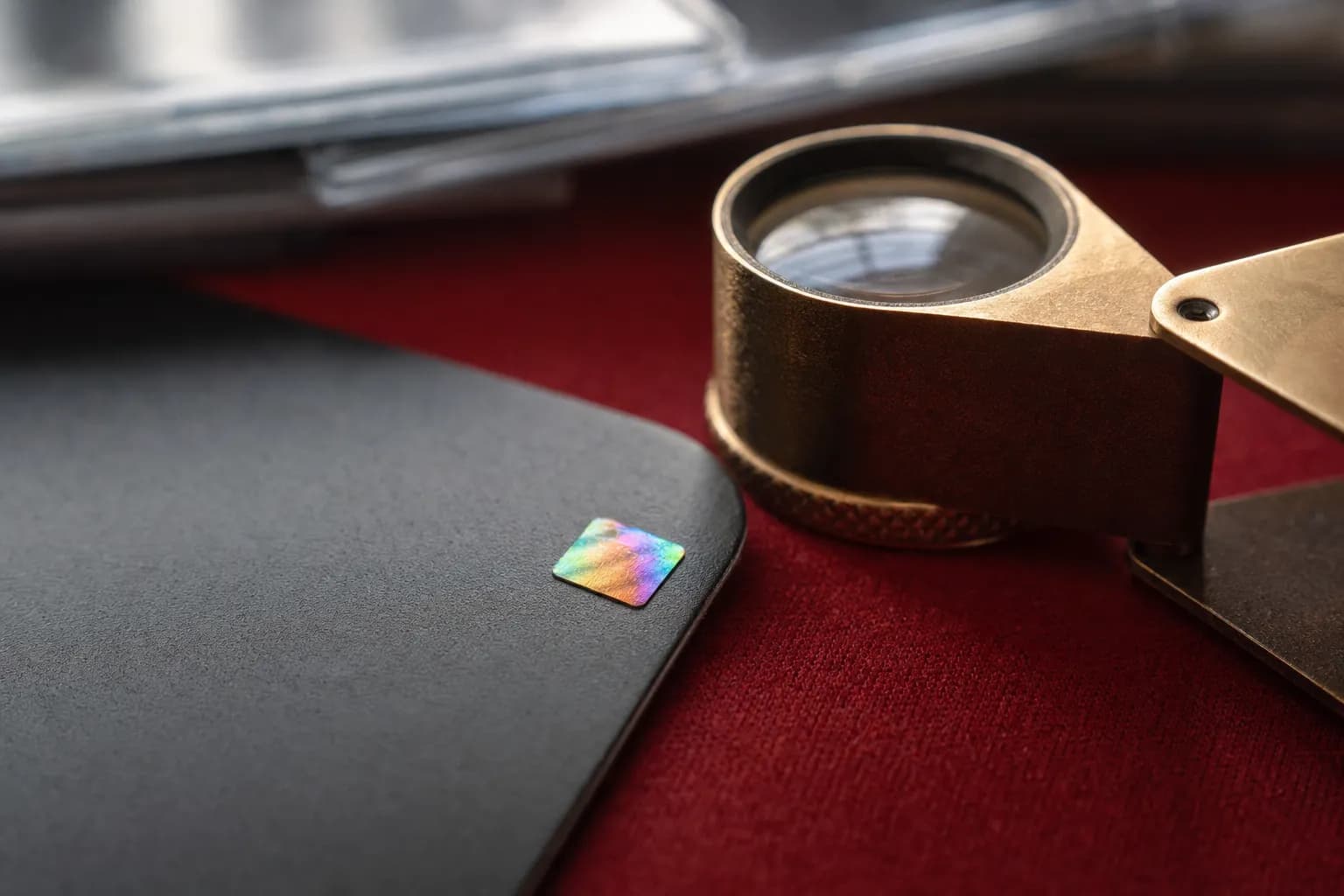
Start at the bottom-right corner. Almost every real Yu-Gi-Oh card since 2000 carries a small square security foil, a hologram of the Eye of Anubis and the word Yu-Gi-Oh!, printed into the card so thinly that it cannot be felt. Konami's rule, quoted by Yugipedia: gold on 1st Edition and Limited Edition cards, silver on Unlimited Edition cards. A card whose edition and foil colour disagree, whose foil is a sticker, or whose foil is missing, is fake. After the corner, collectors check print sharpness, colour, the font and spacing, the back and the feel. No app can settle it from a photo.
The security foil
Yugipedia's article, citing Konami and the game's earlier tournament rules: the foil was introduced with the second series in 2000; it is “printed directly on the card; contrary to its appearance, it is not a sticker”; it “is so thin that it should not be possible to feel by running a finger over it, this is often not the case for counterfeit cards”; and since 2017 it carries tiny stars visible only at certain angles. TCGplayer's conditioning notes describe it as “a gold or silver Eye of Anubis gem in the lower right corner” that is an authentication marker from the manufacturer, and note that on gold-border cards the embossing can partly cover it. A flat, dull or blurry foil, a foil with a raised edge, or the wrong colour for the edition is the single most reliable tell.
Edition against foil colour
Read the edition text, 1st Edition or Limited Edition under the artwork or beside the passcode, or nothing for Unlimited, and compare it with the foil: gold for 1st and Limited, silver for Unlimited. Counterfeiters copy one and not the other. Japanese OCG cards are silver regardless of print run, so a Japanese card with a gold foil is wrong too.
Print, colour, font and back
Under a loupe, genuine printing is sharp with clean edges to the text; fakes are blurred, over-saturated or washed out, with the artwork off-centre against the border. Fonts are the usual giveaway: wrong weight, wide or uneven letter spacing, ATK and DEF in the wrong size, misspellings in the effect text. Compare with an image of the real print, on the marketplace or on the card's page in the app. The back is a specific brown-and-black design with a swirl that fakes render too light, too dark or too glossy. Impossible cards, an ATK of 99,999 or a monster that does not exist, are toys.
Feel, weight and the light
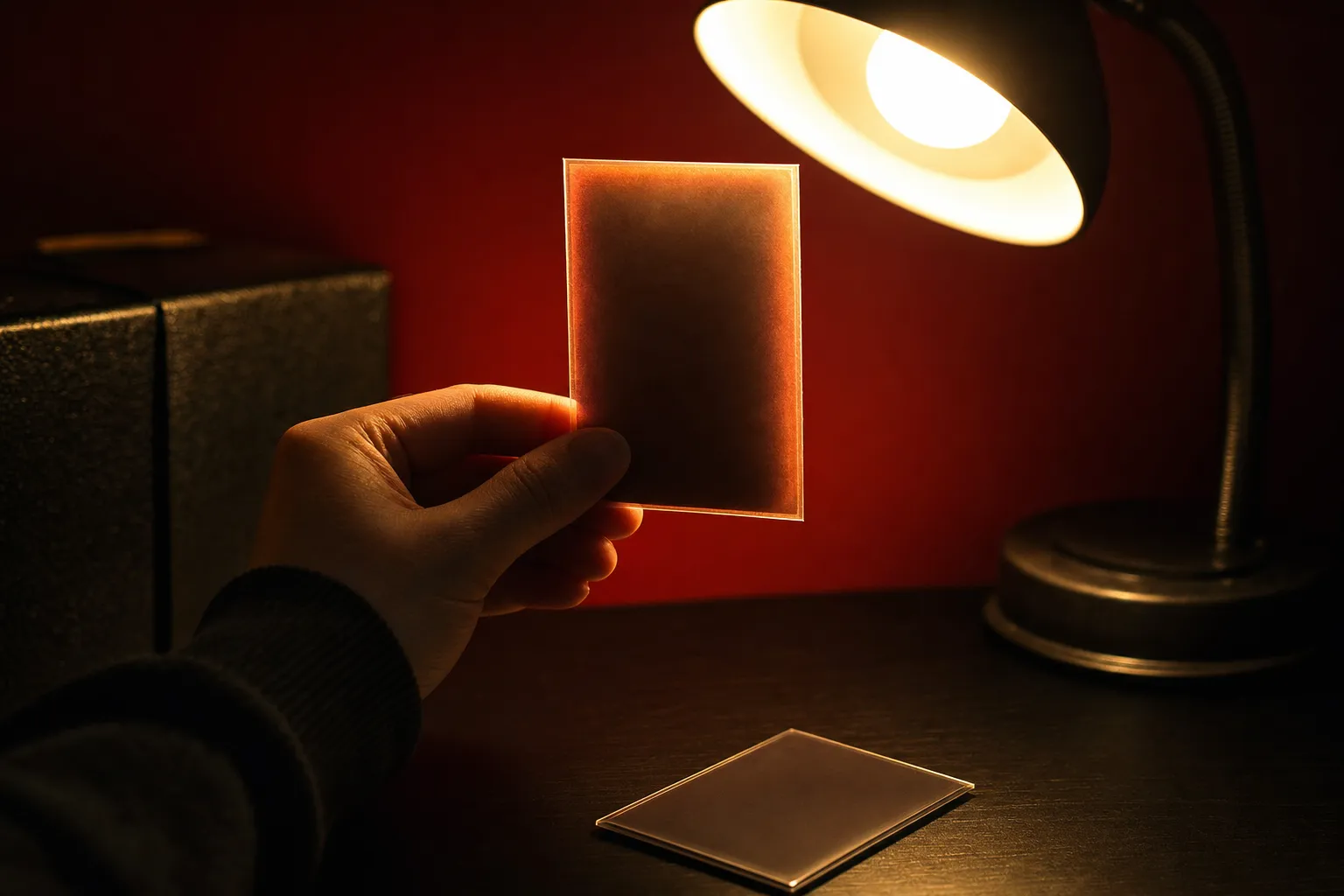
Real cards have a firm, slightly textured stock; many fakes are thinner, glossier or floppier. Hold the card to a lamp: real stock has an even, dark core and passes little light, while cheap counterfeits glow like paper. Set two cards from the same set side by side and the fake usually declares itself in the first second. Several small tells together are proof; one alone rarely is.
The price, the seller and the scanner
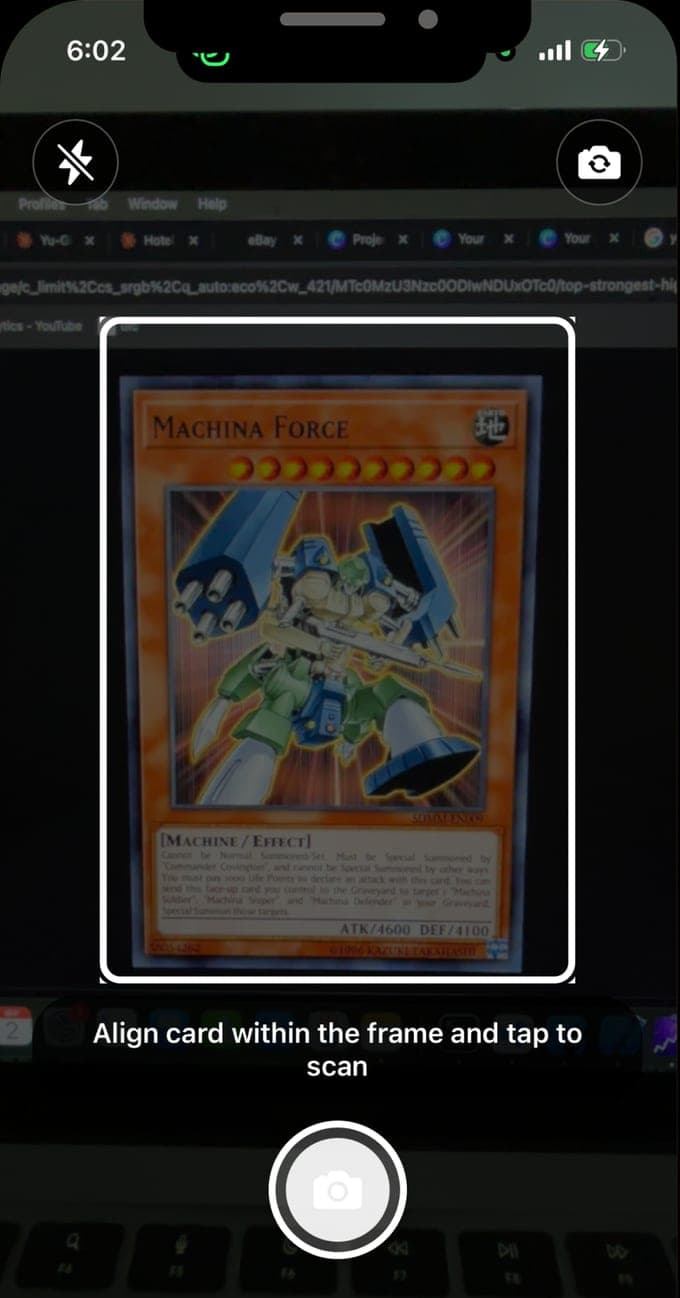
TCGplayer's help centre says it plainly: “If you are offered something, especially in bulk with a huge discount, stop and think about whether you're getting a great deal or if there might be a reason for the low price,” and “Check in with an expert. Some local game stores that specialize in trading cards are able to review them.” For a card worth real money, the graders authenticate before they grade. Yu-Gi-Oh Card Scanner identifies which print a photo shows and hands you that print's details to compare, which catches a card whose set code, rarity or text do not match; it cannot tell a well-made counterfeit of a real print from the real thing, and neither can any app.
Yu-Gi-Oh Card Scanner is an unofficial, fan-made app from Vishwen Labs. It is not authorized, licensed or endorsed by Konami, Studio Dice, SHUEISHA or TV TOKYO, and Yu-Gi-Oh! and all related names, marks and card artwork belong to their owners. Card data and prices come from the public sources named on these pages, and nothing here is advice to buy, sell or grade a card.
Questions people also ask
Do all real Yu-Gi-Oh cards have the hologram in the corner?
All TCG and OCG cards since the second series in 2000, according to Yugipedia, apart from a handful of promotional and demonstration cards. A modern card without the security foil is fake. Older Series 1 Japanese cards predate it.
Can an app detect fake Yu-Gi-Oh cards?
Not from a photo. Scanner apps identify which card an image shows and fetch its details and prices; a good counterfeit of a real print is identified as that print. Use the identification to compare, and a grader or a shop to authenticate.