Yu-Gi-Oh card condition guide: Near Mint, Lightly Played, Moderately Played, Heavily Played, Damaged
Vishwen Labs
Marketplaces price a card by its condition, so the grade you assign is part of its value. TCGplayer's five: Near Mint cards “show minimal wear from shuffling, play, or handling,” Lightly Played “may have minor edge wear, scuffs, or scratches,” Moderately Played “can have edge wear, surface wear, scratching or scuffing, bends with creases,” Heavily Played “show a major amount of wear,” and Damaged “show wear or imperfections beyond the standards for other conditions.” Cardmarket grades from Mint to Poor in seven steps. Yu-Gi-Oh adds two checks of its own: the gold-embossed borders that flake, and the corner security foil that can be worn or misplaced.
TCGplayer's five grades, in its words
Near Mint: “minimal wear from shuffling, play, or handling,” with “a nearly unmarked surface, crisp corners, and unblemished edges outside of a few slight flaws.” Lightly Played: “minor edge wear, scuffs, or scratches,” with “no significant imperfections or issues with the structural integrity.” Moderately Played: “edge wear, surface wear, scratching or scuffing, bends with creases, or a combination of moderate examples of these imperfections.” Heavily Played: “a major amount of wear,” yet the card “must still be able to be authenticated and cannot be structurally damaged.” Damaged: “bends, tears, splitting, foreign substances such as food or liquid.” TCGplayer does not sell Mint or Gem Mint cards, and foils “are evaluated by the same criteria we use for their non-Foil counterparts.”
The Yu-Gi-Oh specifics
TCGplayer's conditioning release notes of December 2024 add two rules for this game. Gold-border flaking: “Some Yu-Gi-Oh! sets feature cards with a gold-embossed border. This gold embossing can become chipped and/or flake off,” and it “will be measured as a Fault, not as edgewear.” The corner gem: if it “is just slightly offset from its typical location but is still squarely in the corner of the card, this is acceptable,” and on gold-border cards, where the embossing can cover it, “the gem must have at least 4mm² visible in the correct location,” otherwise the card is a defect. Foil rarities show scratches readily under a raking light, and the same standards apply to them as to a Common.
Cardmarket's seven
Cardmarket, the European marketplace, grades Mint, Near Mint, Excellent, Good, Light Played, Played and Poor. Its Excellent sits roughly where TCGplayer's Lightly Played does and its Good around Moderately Played; the scales do not map one to one. When you list, the site's own definitions apply, and photographs settle disputes.
How to judge a card
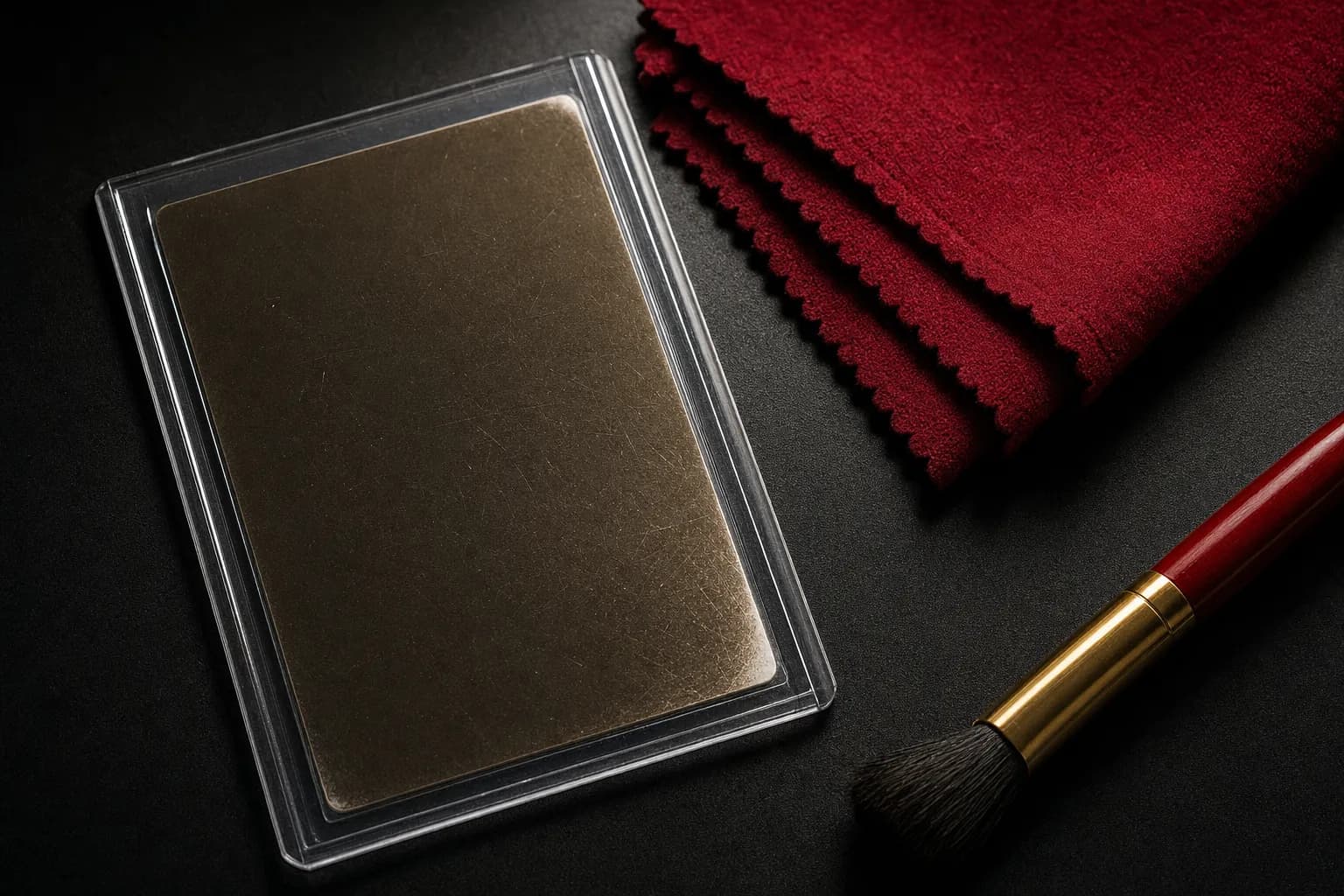
Under a bright, angled light, front and back. Corners first, for rounding and whitening; then edges; then the surface, tilted so the light rakes across the foil; then the whole card for bends, creases and dents. Check the corner gem and, on gold-border cards, the embossing. Look at the back as closely as the front. Be harder on yourself than you would be on a seller, because a buyer will be. Sleeve anything worth more than a booster pack the moment you have judged it.
Recording it in the app
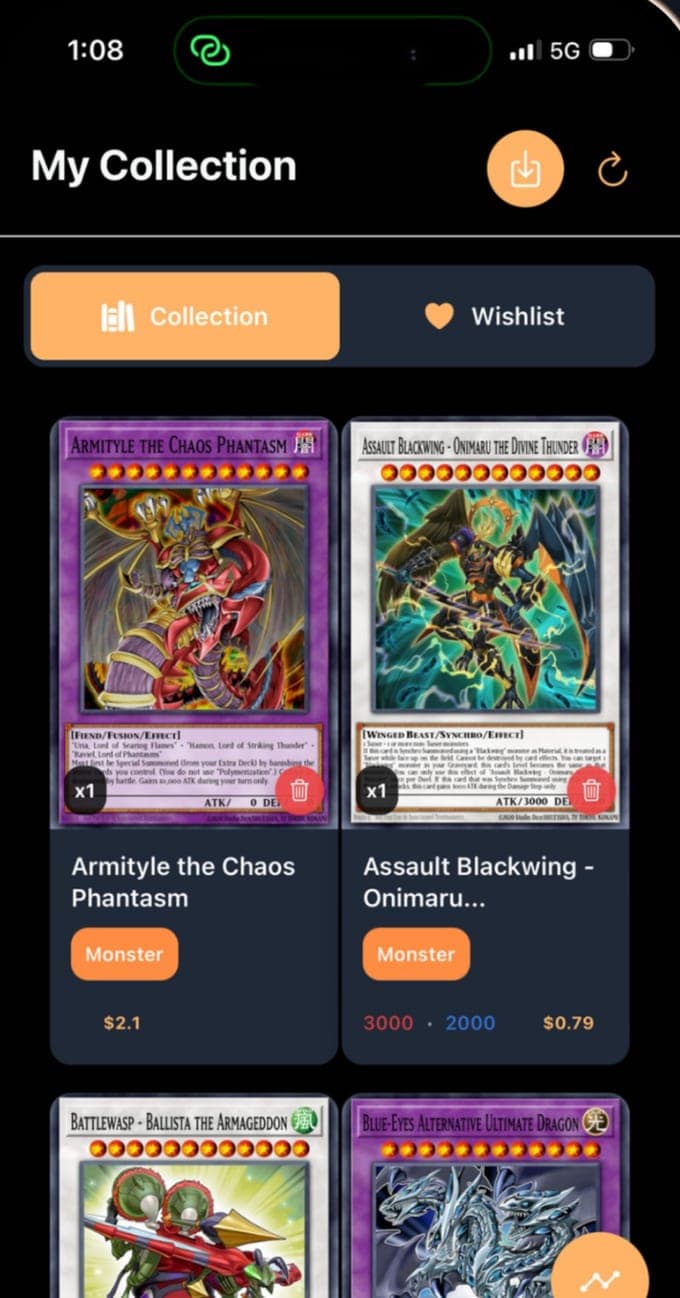
When you add a scanned or browsed card, the app asks for a condition on a Mint-to-Damaged scale that matches the marketplace grades, plus the quantity. The collection's stats total the value, count the rare cards and the mint ones, and list the most valuable cards; the deck builder carries a value per deck. Changing a condition later is a tap, and it is worth doing after a card has been played.
Yu-Gi-Oh Card Scanner is an unofficial, fan-made app from Vishwen Labs. It is not authorized, licensed or endorsed by Konami, Studio Dice, SHUEISHA or TV TOKYO, and Yu-Gi-Oh! and all related names, marks and card artwork belong to their owners. Card data and prices come from the public sources named on these pages, and nothing here is advice to buy, sell or grade a card.
Questions people also ask
Does a flaking gold border make a Yu-Gi-Oh card Damaged?
Not on its own. TCGplayer counts flaked or chipped gold embossing as a Fault rather than edge wear, so it lowers the grade by its size, and a card can have both flaking and edge wear. Large flaking along a border pushes the card down several grades.
What is the difference between Near Mint and Mint for Yu-Gi-Oh cards?
Mint allows no imperfections; Near Mint allows a few slight ones, such as slight edge wear or a couple of minor scratches, in TCGplayer's definition. TCGplayer does not sell Mint or Gem Mint cards; those grades live in the graded market.